Cosmetic Insights &
Industry Trends.
Discover expert articles on makeup formulation, OEM innovations, and global beauty events.
Color Cosmetics
Excellence.
Stay informed with cutting-edge developments from our Milan R&D laboratories.
Pioneering
Beauty Solutions.
Exploring next-generation applicators, sustainability, and private label growth strategies.
China Best Color Cosmetics Contract Manufacturing?
Table of Contents
- What Is Color Cosmetics Contract Manufacturing in China?
- How to Evaluate Chinese Color Cosmetics Manufacturers
- What Is the Contract Manufacturing Process in China?
- Which Quality and Regulatory Standards Should Be Checked?
- How to Choose the Best Chinese Manufacturing Partner?
- FAQS
- Conclusion
- Related Posts
Choosing the right partner for Color Cosmetics Contract Manufacturing can shape a brand’s quality, speed, and reputation. It is not simply about finding the lowest quotation. A capable manufacturer should understand shade development, pigment dispersion, texture control, filling accuracy, and packaging compatibility. Small differences matter. A lipstick may drag on the lips. A foundation may separate after heat exposure. A mascara may dry before the promised shelf life.
Cosmetic chemist Kelly Dobos has described formulation as “both an art and a science.” That view fits modern contract manufacturing. Creative color selection must work with measurable stability, safety, and production requirements. Reliable partners should provide documented quality systems, controlled batch records, appropriate testing, and clear communication about minimum order quantities. They should also support ingredient review and compliant cosmetic claims for each target market.
This article examines how brands can evaluate China-based Color Cosmetics Contract Manufacturing partners with greater confidence. It considers formulation capabilities, factory experience, laboratory support, quality control, lead times, customization, and total cost. Supplier audits and sample testing deserve attention. They can reveal issues that polished presentations hide.
There is no perfect manufacturer. Every partnership involves trade-offs. A lower price may mean fewer customization options. A fast launch may leave less time for testing. Some brands overlook these weaknesses until production begins. That is a costly lesson.
The strongest decision combines evidence with practical judgment. Product samples, certificates, test reports, factory communication, and small pilot orders should guide the final choice. Percentages alone cannot show whether a supplier will protect your brand.
What Is Color Cosmetics Contract Manufacturing in China?
China Best Color Cosmetics Contract Manufacturing?
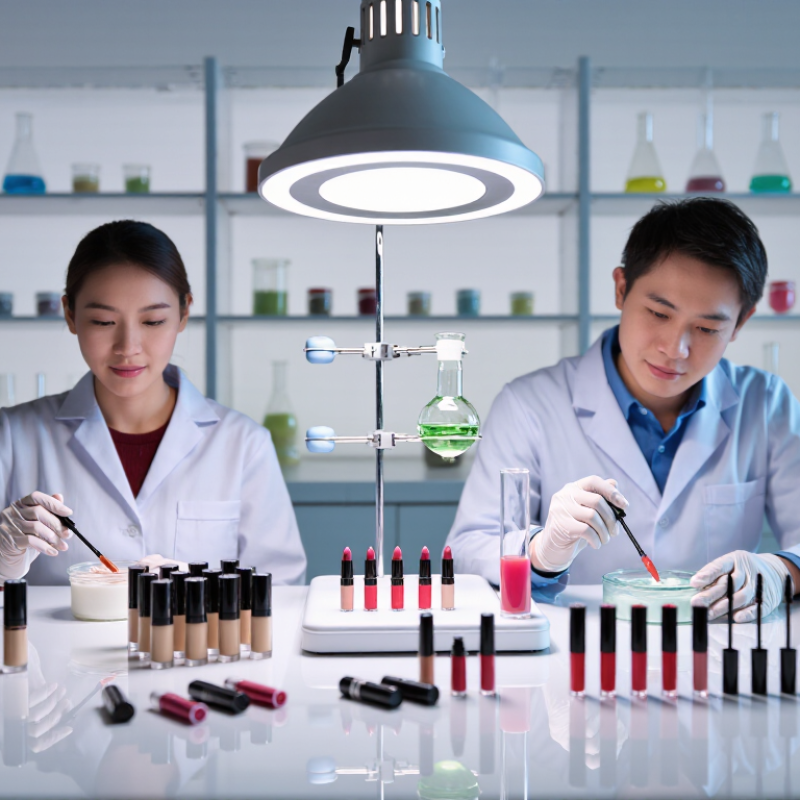
Color cosmetics contract manufacturing in China means an experienced factory develops and produces makeup for another company. Services may include formula adjustment, pigment matching, filling, packaging, and quality inspection. A reliable manufacturer should explain each stage clearly. Product development often begins with a sample brief, such as shade, finish, texture, and skin feel. The factory then prepares laboratory samples for review. Small differences matter. A lipstick may look warm under factory lights but appear cooler outdoors.
Tips: Request ingredient specifications, test reports, sample records, and production timelines. Confirm how the factory controls pigments, filling weight, hygiene, and batch traceability. Ask whether packaging materials are tested for compatibility. Do not judge capability from photos alone. An on-site audit or independent inspection provides stronger evidence.
The best partner is not always the cheapest option. A lower quotation may exclude stability testing, artwork checks, or careful color correction. Discuss target markets early because cosmetic requirements vary between countries. The manufacturer should support documented safety assessments and legally required product information. Clear records make future inspections less stressful. Communication also deserves attention. Ask who approves formula changes and how complaints are handled. I have found that a detailed approval process prevents expensive misunderstandings, although it can slow the first launch. That delay may be worthwhile. A thoughtful supplier will admit technical limits instead of promising every result.
China Best Color Cosmetics Contract Manufacturing: Market Demand Context
China's total cosmetics retail sales increased from RMB 299.2 billion in 2019 to RMB 414.2 billion in 2023, despite a temporary decline in 2022. This expanding market provides a strong demand base for color cosmetics contract manufacturing, including product development, formulation, packaging, and large-scale production services. Data source: National Bureau of Statistics of China.
How to Evaluate Chinese Color Cosmetics Manufacturers
Choosing a Chinese color cosmetics contract manufacturer requires more than comparing quoted prices. A reliable evaluation starts with product fit, documented controls, and clear communication. Ask whether the factory has produced similar textures, shades, and packaging formats. Request recent samples, ingredient specifications, batch records, and stability test results. Do not judge quality from one attractive sample. Review several batches. Color matching can shift under different lighting, so ask about shade tolerances and correction procedures. Confirm the production site, quality team, testing equipment, and process for handling deviations.
Tips: Arrange a video audit or independent factory visit. Check raw material traceability, cleaning records, employee training, and final inspection procedures. Verify that formulas, labels, claims, and packaging can support the destination market’s current requirements. Discuss minimum order quantities, lead times, payment stages, sampling fees, and replacement policies in writing. Vague answers deserve follow-up.
A capable manufacturer should explain technical decisions without hiding behind general promises. Compare actual test reports, not polished presentations. It is tempting to choose the lowest quotation, but low pricing may reflect weaker testing or unexpected reformulation costs. Even experienced buyers can overlook communication delays during scale-up. Set approval checkpoints for color, scent, texture, filling weight, and packaging before mass production. Keep signed specifications and retain approved samples. A factory may pass an audit and still perform poorly on consistency, so ongoing batch reviews remain necessary.
What Is the Contract Manufacturing Process in China?
China’s color cosmetics contract manufacturing process starts with a clear product brief. It should define shade range, texture, packaging, target cost, and sales markets. The factory then reviews raw materials, production capacity, and compliance requirements. Grand View Research valued the global color cosmetics market at about USD 70 billion in 2023, showing strong demand but also intense competition.
The manufacturer usually prepares a formula and laboratory sample. Testing may include stability, microbial limits, compatibility, and color consistency. Packaging samples are checked for leakage, weight, printing accuracy, and filling performance. This stage often takes several revisions. A sample may look perfect under studio lights, yet appear different in daylight. That matters.
After approval, the factory schedules a pilot batch before mass production. Quality teams inspect incoming materials, monitor filling, and retain finished samples. Facilities following ISO 22716 principles typically control hygiene, documentation, and batch traceability. Export products also need labeling and safety documents suitable for each destination. The process is not perfectly linear. Delays can occur when pigments change, packaging molds need adjustment, or test results require reformulation. Buyers should audit records, confirm ownership of formulas, and agree on inspection standards before placing a large order. A low quotation alone proves little. Reliability is built through evidence.
Which Quality and Regulatory Standards Should Be Checked?
China Best Color Cosmetics Contract Manufacturing?
When evaluating a China-based color cosmetics manufacturer, quality evidence should come before attractive pricing. Check whether the facility follows ISO 22716 cosmetic GMP principles and maintains clean, controlled production areas. Ask for batch records, ingredient specifications, Certificates of Analysis, and complete traceability from raw material to finished product. Color matching also needs documented tolerance limits. A lipstick shade should remain consistent across pilot and commercial batches, not only look correct under showroom lighting.
Tips: Request recent microbiological, heavy metal, stability, and packaging compatibility test results. Verify that ingredient lists follow the target market’s current rules. Review prohibited and restricted substance controls, allergen declarations, product claims, and required safety files with a qualified regulatory professional. Do not accept copied documents. Check issuing laboratories, test dates, methods, and sample numbers.
Regulatory readiness is more than holding a certificate. The manufacturer should support formula reviews, safety assessments, product information files, labeling checks, and market-specific notifications where required. Ask how deviations, complaints, recalls, and retained samples are managed. A supplier may pass one audit yet lack consistent control during peak production. That gap matters. An imperfect but honest corrective-action record can be more reliable than flawless paperwork. Also inspect filling lines, air handling, colorant storage, and cleaning logs. These details often reveal the real quality culture.
China Best Color Cosmetics Contract Manufacturing? - Which Quality and Regulatory Standards Should Be Checked?
| Assessment Area | Standard or Regulatory Reference | What Should Be Checked | Typical Evidence to Request | Priority |
|---|---|---|---|---|
| Cosmetics Manufacturing GMP | ISO 22716:2007; applicable Chinese cosmetics GMP requirements | Whether production, quality control, storage, sanitation, personnel training, documentation, and complaint handling follow documented GMP procedures. | Current GMP certificate or audit report, site procedures, training records, sanitation logs, batch records, and corrective-action records. | Critical |
| Quality Management System | ISO 9001:2015 | Whether the manufacturer controls purchasing, production changes, nonconformities, customer complaints, internal audits, and continual improvement. | Valid certificate, scope of certification, process map, internal-audit summary, complaint statistics, and CAPA records. | High |
| Chinese Product Compliance | China Cosmetics Supervision and Administration Regulation and related implementing rules | Correct product classification, ingredient compliance, safety assessment, labeling, responsible-person arrangements, and required registration or filing. | Product classification review, ingredient list, safety assessment materials, Chinese label artwork, registration or filing plan, and responsible-person documentation. | Critical |
| Export-Market Regulatory Capability | Destination-market rules, such as EU Cosmetics Regulation (EC) No 1223/2009 or U.S. MoCRA requirements | Whether the factory can support market-specific safety files, ingredient restrictions, adverse-event procedures, facility information, labeling, and product notifications or registrations where applicable. | Regulatory gap assessment, Product Information File support, safety documentation, U.S. facility and product compliance support, and export-label review. | Critical |
| Raw Material Qualification | GMP purchasing controls; applicable cosmetic ingredient restrictions | Whether pigments, colorants, oils, waxes, preservatives, fragrances, and packaging materials are approved, traceable, and suitable for the intended market. | Approved-supplier list, certificates of analysis, specifications, safety data sheets, allergen information, origin records, and incoming inspection results. | Critical |
| Colorant and Pigment Safety | Destination-market positive lists and restrictions; applicable cosmetic color additive requirements | Whether each pigment is permitted for the intended product type and application area, including eye-area, lip, face, and leave-on use. | Color index or regulatory identity, purity specification, heavy-metal limits, batch test results, and market-specific compliance statement. | Critical |
| Microbiological Quality | ISO 17516:2014; applicable destination-market microbiological limits | Whether finished products meet microbial limits and whether higher-risk products receive appropriate microbial testing. | Microbiological specifications, test methods, laboratory qualifications, batch results, environmental monitoring records, and out-of-specification investigations. | Critical |
| Preservative Effectiveness | ISO 11930:2019 or an equivalent validated preservative-challenge method | Whether emulsions, liquid products, creams, mascaras, and other water-containing formulas are adequately protected against microbial growth. | Preservative challenge test, formulation version, test protocol, acceptance criteria, and investigation records for failed results. | High |
| Physical and Chemical Testing | Approved product specifications and validated test methods | Whether shade, viscosity, pH, odor, appearance, fill weight, density, melting point, adhesion, and other relevant parameters are controlled. | Master specifications, laboratory methods, calibration records, certificate of analysis, retain-sample results, and batch-release approval. | Critical |
| Stability and Shelf Life | Validated stability program; ISO/TR 18811:2018 as a stability-testing framework | Whether the formula and packaging remain safe, stable, and visually acceptable under real-time and accelerated conditions. | Stability protocol, temperature and humidity conditions, compatibility results, light exposure data, freeze-thaw results, and shelf-life justification. | Critical |
| Packaging Compatibility | GMP packaging controls; product-specific compatibility assessment | Whether packaging causes leakage, color change, odor transfer, corrosion, component swelling, pump failure, or formula contamination. | Compatibility test reports, component specifications, migration or interaction assessments, packaging inspection records, and transport tests. | High |
| Contamination and Foreign-Material Control | GMP hygiene, zoning, cleaning, and environmental-control practices | Whether the facility controls dust, fibers, metal fragments, cross-contamination, allergens, and color carryover between batches. | Cleaning validation or verification, line-clearance records, environmental monitoring, pest-control logs, filtration controls, and deviation reports. | Critical |
| Batch Traceability and Recall | GMP traceability and applicable cosmetics recall requirements | Whether every batch can be traced from raw materials through filling, release, distribution, complaints, and potential recall. | Batch numbering system, material issue records, distribution records, mock-recall results, complaint logs, and recall procedure. | Critical |
| Laboratory Competence | ISO/IEC 17025:2017 for competent testing laboratories | Whether internal or external laboratories use validated methods, suitable equipment, trained analysts, and controlled records. | Laboratory accreditation scope, method-validation records, calibration certificates, proficiency-testing results, and analyst training records. | High |
| Change Control | GMP change-control and notification procedures | Whether changes to ingredients, suppliers, equipment, process parameters, packaging, or test methods are assessed before implementation. | Change-control forms, risk assessments, revalidation results, regulatory impact reviews, approval signatures, and customer-notification records. | Critical |
| Worker and Facility Safety | ISO 45001:2018; applicable workplace-safety requirements | Whether the facility manages chemical exposure, fire risks, machinery safety, emergency response, and occupational training. | Certificate, risk assessments, safety-training records, emergency drills, chemical-storage procedures, and incident statistics. | Medium |
| Environmental Management | ISO 14001:2015; applicable environmental laws and permits | Whether the manufacturer controls wastewater, emissions, hazardous waste, energy use, and environmental incidents. | Certificate, environmental permits, waste-transfer records, wastewater reports, emissions records, and corrective-action documentation. | Medium |
| Audit and Supplier Transparency | Customer quality agreement and risk-based supplier-audit principles | Whether the factory permits pre-contract audits, routine inspections, document review, sample testing, and independent verification. | Completed audit questionnaire, corrective-action plan, factory license, production-site details, subcontractor list, and quality agreement. | Critical |
How to Choose the Best Chinese Manufacturing Partner?
China Best Color Cosmetics Contract Manufacturing?
How to Choose the Best Chinese Manufacturing Partner?
China’s color cosmetics market rewards speed, flexibility, and disciplined quality control. Grand View Research valued the global color cosmetics market at approximately USD 70.8 billion in 2023, with continued growth expected through 2030. This growth makes supplier selection more important than a low quotation.
Start with technical evidence, not polished photographs. Request ISO 22716 documentation, recent audit records, batch traceability, and microbiological testing procedures. A reliable factory should explain pigment dispersion, shade matching, stability testing, and packaging compatibility in clear terms. Ask to inspect a production line, raw material warehouse, and retained-sample room. Small details matter. Check temperature logs. Check cleaning records.
Evaluate development experience with your exact product type. Powder, liquid, cream, and water-based formulas require different equipment and controls. Request three pilot samples, including one produced under factory conditions. Compare color, texture, odor, coverage, and separation after heat and freeze-thaw testing. The first sample may look excellent. It may still fail after eight weeks.
According to ISO 22716 principles, documented procedures and trained personnel support consistent cosmetic manufacturing. Confirm minimum order quantities, formula ownership, change-control rules, and corrective-action timelines in writing. A factory that refuses reasonable questions is a risk. However, perfection is unrealistic; even experienced suppliers can miss a packaging interaction or shade variation. Build independent testing into the launch plan, and keep communication records from quotation to final inspection.
FAQS
A factory develops and produces makeup for another company. Services may include formula adjustment, pigment matching, filling, packaging, and inspection.
It often starts with a brief describing shade, finish, texture, and skin feel. The factory then prepares laboratory samples for review.
Lighting changes perception. A lipstick may look warm indoors but appear cooler outdoors. Small pigment differences matter.
Request ingredient specifications, test reports, sample records, production timelines, and batch records. Keep approved samples for comparison.
Review several batches, not one attractive sample. Check cleaning records, employee training, testing equipment, and final inspection procedures.
Not always. A low price may exclude stability testing, artwork checks, or careful color correction. Unexpected costs can appear later.
Approve color, scent, texture, filling weight, and packaging. Confirm each point in writing. This may slow launch, but it prevents costly confusion.
Discuss the target market early. Verify labels, claims, packaging, and formulas against current local requirements. Requirements differ between countries.
Ask who approves formula changes and handles complaints. Clear communication supports faster decisions, though delays can still happen during scale-up.
No. An audit provides useful evidence, but it cannot prove every future batch will match. Ongoing reviews remain necessary.
Conclusion
China’s Color Cosmetics Contract Manufacturing industry offers a flexible solution for companies seeking efficient product development, reliable production, and scalable supply. This article explains what contract manufacturing involves, including formula development, packaging support, bulk production, filling, and quality control. It also outlines how to evaluate Chinese manufacturers by reviewing their experience, production capabilities, communication, sampling process, transparency, and ability to meet specific product requirements.
The guide further describes the typical manufacturing process, from initial consultation and product specifications to sample approval, material sourcing, production, inspection, and delivery. It highlights important quality and regulatory checks, such as ingredient documentation, factory hygiene, batch traceability, product testing, labeling accuracy, and compliance with the target market’s requirements. Finally, readers will learn how to select the best manufacturing partner by comparing quality systems, service capabilities, lead times, pricing, customization options, and long-term cooperation potential.

Blog Tags: