MPlus Beauty Hub

Cosmetic Insights &
Industry Trends.

Discover expert articles on makeup formulation, OEM innovations, and global beauty events.

Formulation Science

Color Cosmetics
Excellence.

Stay informed with cutting-edge developments from our Milan R&D laboratories.

Manufacturing Expertise

Pioneering
Beauty Solutions.

Exploring next-generation applicators, sustainability, and private label growth strategies.

0%

Selecting the right eye makeup contract manufacturer can influence product quality, launch timing, and customer trust. For brands, the decision involves more than comparing prices or reviewing attractive packaging. Eye Makeup Contract Manufacturing requires careful evaluation of formulation expertise, color consistency, production controls, and communication standards.

A reliable partner should provide clear manufacturing records, practical samples, and evidence of suitable quality systems. Ask how the factory manages pigments, preservatives, allergen information, stability testing, and batch traceability. Small details matter. A clean filling room, labeled test samples, and consistent shade cards can reveal more than a polished sales presentation. Experience also matters when developing mascaras, eyeliners, eyeshadows, and sensitive-eye products.

This guide presents seven practical tips for choosing a capable manufacturer. It considers formulation support, minimum order quantities, testing procedures, packaging options, production capacity, and regulatory responsibility. The goal is not to find a supplier that promises everything. That sounds simple. In reality, every manufacturer has limitations, and some weaknesses may appear only during a pilot run. Brands should examine those gaps honestly before signing a long-term agreement.

Professional judgment comes from asking specific questions and checking documented evidence. References from similar cosmetic projects can add confidence, but they should not replace an on-site review or independent testing. A dependable manufacturer welcomes reasonable scrutiny. It also explains delays, failed samples, and corrective actions without hiding behind vague language. These seven tips can help brands make a more informed decision, reduce avoidable risks, and build a stronger product partnership.
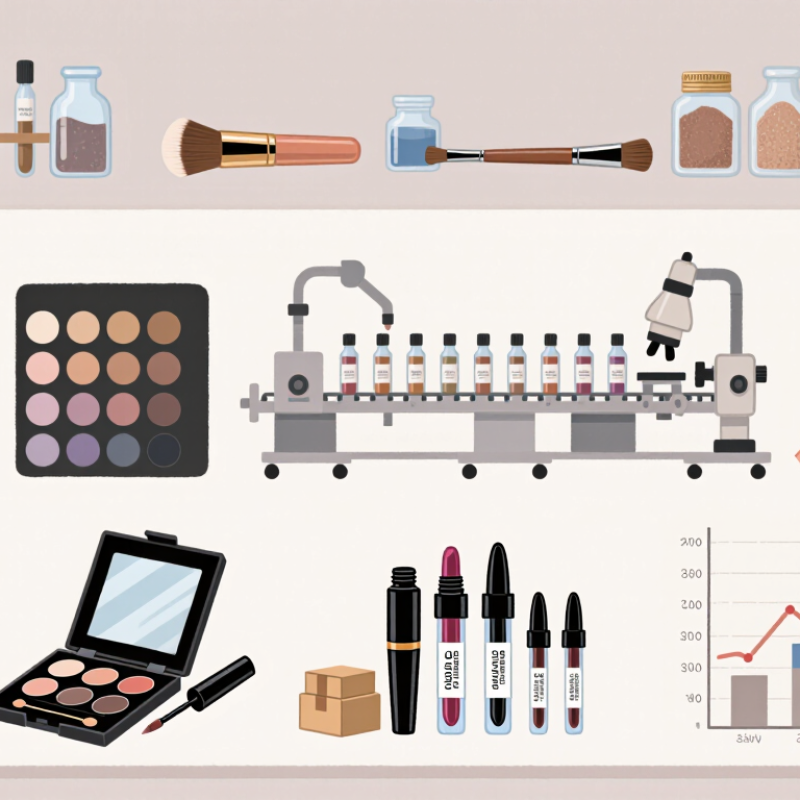
7 Tips for Choosing an Eye Makeup Contract Manufacturer?

Define Your Eye Makeup Product and Regulatory Requirements

Before comparing contract manufacturers, define the product precisely. Eye makeup can mean powder shadow, cream liner, liquid liner, or mascara. Each format needs different equipment, testing, and packaging controls. Loose powder may require dust management. Mascara needs a compatible brush and microbial protection. Small details matter.

Write a product brief covering shade range, finish, wear time, removal, fragrance policy, and target markets. Separate cosmetic benefits from medical or exaggerated claims. “Long-wearing” may need substantiation, while “treats irritation” can create different regulatory expectations. List every intended sales region. Ingredient limits, labeling rules, and responsible-person obligations may differ. Ask the manufacturer for ingredient reviews, safety assessments, stability data, microbiological testing, and batch records. Do not accept a generic compliance statement. Request evidence tied to your formula and packaging.

During audits, I look for controlled weighing, traceable raw materials, clean filling areas, and retained samples. Ask how they investigate a failed preservative test or a leaking tube. Their answer reveals more than a polished presentation. I once underestimated packaging compatibility; a liner softened after heat exposure. That mistake was avoidable. Build transport and temperature testing into development. Confirm artwork, warnings, net contents, batch coding, and usage directions before approval. Keep decisions documented, even when deadlines feel urgent. Some requirements remain unclear until a local assessor reviews the file. Plan for that uncertainty.

Evaluate the Manufacturer’s Formulation and Product Expertise

Evaluate the Manufacturer’s Formulation and Product Expertise

A capable eye makeup manufacturer should understand the delicate eye area, not simply copy a popular texture. Ask how its chemists select pigments, waxes, oils, and film-formers for each product type. Eyeliner needs controlled glide and clean definition. Mascara requires balanced viscosity, reliable lash separation, and dependable drying time. Eyeshadow needs even pigment distribution without excessive fallout.

Request formulation samples and technical documentation. Review the ingredient list, usage level, stability data, and compatibility with the packaging. A formula may look smooth on day one but crack, separate, or change odor after heat exposure. Ask whether the manufacturer performs accelerated stability testing, microbial testing, and packaging interaction checks. These details reveal practical expertise.

Ask about irritation assessment and quality controls for raw materials. The manufacturer should explain its testing process clearly, without promising impossible results. Product claims also need evidence. “Long-wear” should come from measured wear testing, not attractive wording. During sample reviews, inspect the brush, wiper, cap, and applicator closely. Small packaging flaws can affect formula performance.

Experience matters here. A chemist who understands filling equipment can prevent problems before production begins. Still, no development process is flawless. Early samples may feel too dry or overly waxy. That is not always a failure; it can expose useful gaps. Keep written feedback specific, repeatable, and linked to performance. A manufacturer willing to revise its formula thoughtfully is often more dependable than one offering instant perfection.

Verify Facility Standards, Certifications, and Production Capacity

A reliable eye makeup contract manufacturer should prove more than a polished factory tour. McKinsey’s 2023 beauty report projects the global beauty market could reach about $580 billion by 2027, growing roughly 6% annually. That pressure can encourage rushed production. Ask for cleanroom zoning, ventilation controls, pest records, equipment maintenance, and documented batch traceability. Look for separate areas for powders, liquids, filling, and final packing.

Certifications need careful interpretation. ISO 22716 demonstrates alignment with cosmetic Good Manufacturing Practices, but it does not replace your own supplier audit. The U.S. Food and Drug Administration states that cosmetic facilities and products are not generally pre-approved before sale. Request recent audit reports, corrective-action records, environmental monitoring results, and employee training logs. Check whether certificates cover the actual production site, not only a parent company.

Capacity is practical, not impressive on paper. Request line speeds, minimum order quantities, changeover times, backup equipment, and peak-season schedules. Grand View Research valued the global cosmetics market at approximately $343.7 billion in 2023, with continued growth forecast through 2030. A manufacturer may accept your order yet lack stable capacity for repeated launches. Ask for three months of anonymized production records. A certificate can expire. So can confidence. I would also test one pilot batch, because factory promises sometimes sound better than factory reality.

Compare Samples, Packaging Options, Pricing, and Minimum Orders

Choosing an eye makeup contract manufacturer requires more than a polished catalog. Compare samples under daylight, bathroom lighting, and eight-hour wear. Check fallout, creasing, drying time, pigment consistency, and removal comfort. Ask for batch records and stability data. Samples reveal gaps. Do not rush.

Packaging deserves equal attention. Request compact, wand, pan, and refill samples when relevant. Test hinges, closures, applicator fit, leakage, and label space. Compare plastic, glass, and recycled-content options against breakage and shipping costs. The Sustainable Packaging Coalition reports that packaging decisions increasingly influence consumer purchase behavior, but sustainability claims still require documented material evidence. Attractive packaging can fail quickly.

Request written quotations with identical specifications. Separate formula, filling, decoration, testing, tooling, freight, and revision charges. Compare three pricing scenarios, not one. McKinsey’s 2023 beauty market analysis identifies value perception as a major purchasing factor, making cost control important without weakening product performance. Review minimum order quantities carefully. A low unit price may hide a 20,000-unit commitment. Ask whether mixed shades count toward one MOQ, and confirm reorder quantities. Also compare lead times, payment stages, and sample fees. One imperfect detail matters: suppliers may quote packaging before final formula approval. Recheck everything after the pilot batch. A spreadsheet helps, but it cannot replace physical inspection.

7 Tips for Choosing an Eye Makeup Contract Manufacturer

Suggested evaluation weighting for comparing samples, packaging options, pricing, and minimum orders

Prioritize product samples and quality controls before committing to large orders. Review color payoff, texture, wear performance, ingredient documentation, packaging compatibility, unit pricing at different volumes, and minimum order quantities. The weighting shown is a practical planning model and should be adjusted to fit your product category, launch volume, and compliance requirements.

Review Communication, Contracts, Testing, and Ongoing Support

A reliable eye makeup contract manufacturer should communicate clearly before any formula is approved. Ask who manages your project, how often updates arrive, and which documents support each decision. A short video call can reveal more than a polished sales presentation. Discuss shade targets, texture, packaging limits, minimum order quantities, and expected production dates. Vague answers deserve careful questions.

The contract should define ownership, confidentiality, quality standards, testing duties, approval stages, and remedies for defects. Request written procedures for formula changes, rejected batches, delayed materials, and returned goods. Do not rely on friendly promises alone. Experienced teams should explain stability testing, microbial evaluation, compatibility checks, and color consistency testing in practical terms. Ask for sample reports and acceptance criteria. A perfect sample proves little if the testing plan is weak.

Ongoing support matters after production starts. Confirm whether the manufacturer tracks batch records, investigates complaints, and supports future shade adjustments. During my review of manufacturing projects, small communication gaps often caused larger delays than technical problems. That is worth remembering. I would also leave room for honest uncertainty; test results may require reformulation, and timelines can move. A dependable partner reports problems early, documents corrective actions, and keeps technical conversations understandable for both product and operations teams.

FAQS

What should an eye makeup product brief include?

Define the format, shade range, finish, wear time, removal method, and fragrance policy.

Why do different eye makeup formats need different manufacturing controls?

Powder shadow may need dust management and even pigment distribution.

Which technical documents should a manufacturer provide?

Request ingredient reviews, safety assessments, stability data, microbial testing, and batch records.

How can samples be evaluated properly?

Compare samples in daylight, bathroom lighting, and after eight hours of wear.

What packaging tests are important for eye makeup?

Test closures, hinges, wipers, brushes, applicator fit, leakage, and label space.

How should product claims be reviewed?

Separate cosmetic benefits from medical or exaggerated claims.

What should be included in a manufacturing quotation?

Request identical specifications for every supplier.

How can minimum order quantities create unexpected costs?

A low unit price may require a large total commitment.

What should happen when early samples are imperfect?

Record specific feedback about dryness, waxiness, glide, separation, or drying time.

Conclusion

Choosing the right partner for Eye Makeup Contract Manufacturing begins with clearly defining your product concept, target users, desired textures, shades, packaging, and regulatory requirements. A qualified manufacturer should demonstrate strong expertise in eye makeup formulation, ingredient selection, stability, safety, and product development. It is also important to verify the facility’s hygiene standards, certifications, quality systems, equipment, production capacity, and ability to support your expected order volume.

Before making a decision, compare product samples carefully and evaluate packaging choices, pricing, lead times, and minimum order quantities. Transparent communication is essential throughout development and production, so review contracts, confidentiality terms, testing procedures, quality responsibilities, and approval processes in detail. A reliable manufacturing partner should provide responsive communication, consistent quality control, documentation support, and ongoing assistance with improvements, replenishment, and future product expansion. By assessing these factors together, you can reduce production risks and build a more dependable supply chain for your eye makeup line.

Olivia

Olivia

Olivia is a professional marketing specialist with a strong understanding of market trends, customer needs, and effective business communication. As a key contributor to the company’s content and marketing team, she regularly updates the corporate website with informative, practical, and......