MPlus Beauty Hub

Cosmetic Insights &
Industry Trends.

Discover expert articles on makeup formulation, OEM innovations, and global beauty events.

Formulation Science

Color Cosmetics
Excellence.

Stay informed with cutting-edge developments from our Milan R&D laboratories.

Manufacturing Expertise

Pioneering
Beauty Solutions.

Exploring next-generation applicators, sustainability, and private label growth strategies.

0%

Custom Makeup Applicators are no longer simple add-ons; they shape product performance, hygiene, and brand experience. A tapered sponge can reach the inner eye corner, while a soft doe-foot tip controls how much gloss reaches the lips. Small design choices matter. For global buyers, choosing a supplier means checking more than price. Material options, sample quality, production capacity, minimum order quantities, and packaging all affect the final product.

Market growth adds pressure to make those choices carefully. McKinsey’s 2023 beauty-market analysis estimated that the global beauty market could reach about $580 billion by 2027, with annual growth of roughly 6%. That forecast covers beauty broadly, not applicators alone. Still, it signals why brands are reviewing product details and sourcing plans more closely. A growing market does not guarantee a reliable factory. That distinction is easy to miss.

This Top 10 guide introduces suppliers serving international buyers and highlights practical points for comparison. Look for clear answers on customization, material specifications, quality checks, sample approval, lead times, and export experience. Ask for supporting documents where relevant, and confirm that claims match the actual product and production process. A polished catalog is useful, but it cannot replace a tested sample. Supplier information can also change, so verify current capabilities directly. That takes time. It is worth it.
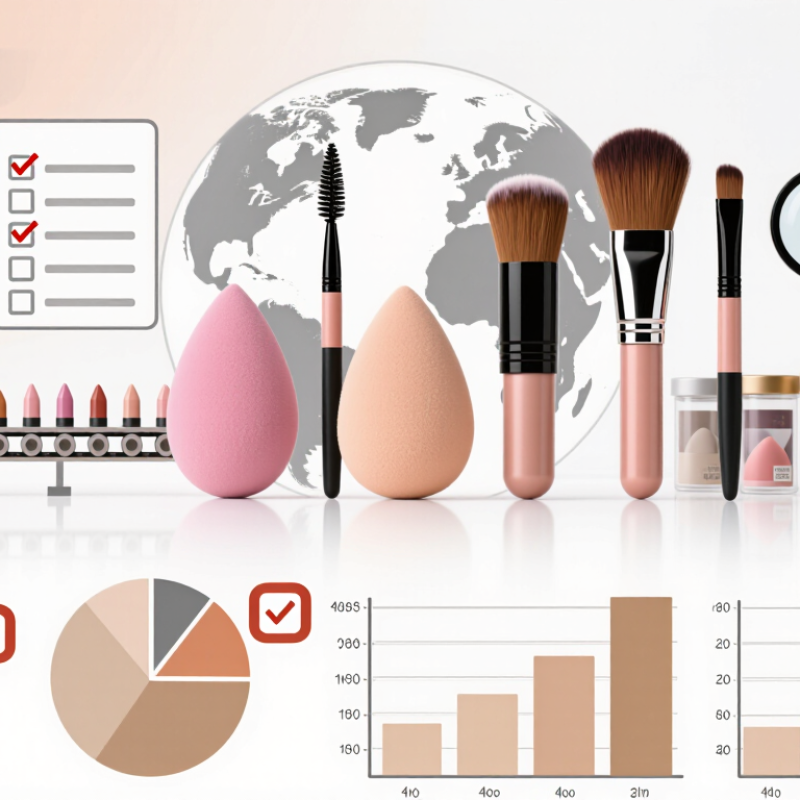
Top 10 Custom Makeup Applicator Suppliers for Global Buyers

What Custom Makeup Applicators Are and How They Are Used

Custom makeup applicators are tools designed around a product’s texture, application area, and intended user. Customization may involve the tip’s shape, size, softness, handle length, or material. A small, tapered tip can help place concealer beside the nose, while a wider sponge can spread foundation across the cheeks. The right design should feel stable in hand and suit the formula. A tool that works well with liquid makeup may not perform as neatly with powder.

For daily use, applicators help apply, blend, or detail makeup with more control than fingers alone. A short handle may be easier to maneuver near the eyes; a flexible tip can reach narrow corners. Materials and construction matter, too. They affect how much product the tool picks up and how easily it can be cleaned. In product development, teams should assess durability and skin comfort, then test prototypes with the actual formula. A sample can feel perfect in a meeting and still perform poorly after repeated washing. That is worth reconsidering.

Tips: Test the applicator with realistic amounts of product, not just a clean sample. Check its grip with dry and slightly damp hands. Confirm cleaning instructions are practical for everyday users. Small trials often reveal awkward edges or excess product waste.

How Custom Applicator Suppliers Serve Global Buyers

Global buyers need more than a low unit price. They need applicators that suit different formulas, packaging formats, and user habits. McKinsey’s 2023 beauty-market analysis estimated that the global beauty market could reach $580 billion by 2027, from about $430 billion in 2022. That growth raises the stakes for reliable supply. Small details matter.

Custom applicator suppliers can adapt tip shape, handle length, material, and flock density to a buyer’s product and filling line. They should confirm dimensions, sample approval steps, minimum order quantities, and production lead times in writing. For cross-border orders, clear specifications and batch inspection records help prevent avoidable mismatches. A soft doe-foot tip, for example, may feel right in a sample but perform differently after mass production. That gap deserves attention.

Packaging needs equal care. The OECD’s Global Plastics Outlook (2022) reports that only 9% of global plastic waste was recycled in 2019. Buyers can ask suppliers to reduce excess packaging and assess recyclable options, while protecting applicators from contamination and damage. Ask for evidence, not just promises. Still, a polished sample cannot prove consistent output; production batches need checks for dimensions, tip adhesion, and visible defects. There is no perfect specification for every market.

Key Criteria for Evaluating Makeup Applicator Suppliers

When evaluating custom makeup applicator suppliers, look beyond unit price. Ask for material specifications, handle dimensions, applicator-head tolerances, and production minimums. A dependable supplier should explain how it checks bristle shedding, bonding strength, and color consistency. Request a pre-production sample and compare it with your approved specifications under normal use. Details matter.

Tips: Test samples with the intended product, such as powder or liquid formulas. Check grip, application feel, and cleaning response. Ask how batch inspections are recorded, and confirm lead times, packaging options, and how production changes are communicated.

Clear quality controls and realistic timelines are useful signs, but they do not guarantee identical results in every batch. Ask whether the supplier can provide inspection records and trace material lots when available. Review the sample yourself; photographs can hide rough edges or uneven fibers. No checklist removes every risk. A documented sample may still differ slightly from bulk production, so agree in writing on acceptable variations, defect handling, and approval steps before placing an order. When answers are vague, pause and clarify rather than assuming both sides mean the same thing.

Top 10 Custom Makeup Applicator Suppliers for Global Buyers

Global buyers comparing the top 10 custom makeup applicator suppliers should look beyond polished product photos. Ask for samples in the exact shape, material, and size you plan to order. A pointed sponge tip, for example, should reach the inner corner without bending or shedding.

Check how each supplier manages customization. Can they adjust handle length, applicator density, color, and packaging? Request written specifications, a sample approval process, and clear details on minimum order quantities and production lead times. Small differences matter. A handle that feels comfortable in one trial may become slippery when used with lotion or foundation.

Reliable suppliers should explain their quality checks and how they handle defects between batches. Ask how samples are stored, which materials are available, and whether packaging can be adapted for your destination market. Compare responses from all ten candidates in one table; vague answers are worth noting. I would not treat the lowest quote as the best value. It is easy to overlook shipping, rework, or inconsistent tips. Even a careful checklist cannot predict every production issue, so leave time for a final sample review before approving a larger order.

How to Compare Suppliers and Choose the Right Partner

When comparing custom makeup applicator suppliers, start with a clear product brief, not a catalog. Specify the applicator shape, tip density, handle material, dimensions, color, and intended formula. Ask each supplier for a sample made to the same specifications. Test how it picks up and releases product. Check for loose fibers, uneven edges, and a handle that feels awkward after repeated use. Small differences matter.

Tips: Request a written quote showing sample fees, minimum order quantity, production time, and packaging costs. Keep records. Compare like with like.

Ask how the supplier checks incoming materials and finished applicators. Request relevant quality documents and clarify how defects are handled. A polished sample does not guarantee consistent bulk production, so ask whether a pre-production sample can be approved before manufacturing. Compare communication, too: clear answers about tolerances and timelines are more useful than vague promises. Price still matters, but the cheapest offer may leave important details unresolved. I would not judge a supplier from one email or one sample alone; that can be an imperfect shortcut.

FAQS

What details should buyers include in a custom applicator brief?

Specify tip shape, density, handle material and length, dimensions, color, and intended formula. Be precise. A soft tip may feel different after mass production.

Why should suppliers make samples to exact specifications?

Exact samples make comparisons fair. Test product pickup and release, then check for loose fibers, uneven edges, and awkward handling.

Does an approved sample guarantee consistent bulk production?

No. A sample cannot prove every batch will match. Ask about checks for dimensions, tip adhesion, and visible defects.

What should buyers confirm before placing an order?

Get sample approval steps, minimum order quantity, production lead time, and costs in writing. Keep records. Details can slip between emails.

How can buyers compare supplier quotes fairly?

Compare the same shape, materials, quantity, packaging, and delivery needs. Include sample fees and possible rework. The lowest quote is not always best.

What questions should buyers ask about quality control?

Ask how incoming materials and finished applicators are checked. Clarify defect handling and request relevant quality documents. Vague answers deserve a second look.

How can packaging choices reduce waste without risking product quality?

Ask about reducing excess packaging and recyclable options. Packaging must still protect applicators from damage and contamination. Ask for evidence, not promises.

How should buyers make a final supplier decision?

Compare communication, timelines, specifications, and sample performance in one table. I would not decide from one email or sample alone. That shortcut can fail.

Conclusion

Custom Makeup Applicators are designed to apply, blend, or refine makeup products with greater precision and consistency. Available in different shapes, materials, and formats, they can be tailored to suit particular products, user preferences, and packaging requirements. For global buyers, suppliers may support customization throughout the process, from choosing suitable materials and developing samples to planning production, packaging, and delivery.

This overview explains how to assess potential suppliers by considering product quality, customization options, manufacturing capacity, communication, lead times, and pricing transparency. It also introduces ten types of supplier profiles that buyers may encounter, without assuming that one option fits every business. By comparing capabilities against specific product goals, order volumes, and service needs, buyers can identify a reliable partner and make better-informed sourcing decisions.

Olivia

Olivia

Olivia is a professional marketing specialist with a strong understanding of market trends, customer needs, and effective business communication. As a key contributor to the company’s content and marketing team, she regularly updates the corporate website with informative, practical, and......