MPlus Beauty Hub

Cosmetic Insights &
Industry Trends.

Discover expert articles on makeup formulation, OEM innovations, and global beauty events.

Formulation Science

Color Cosmetics
Excellence.

Stay informed with cutting-edge developments from our Milan R&D laboratories.

Manufacturing Expertise

Pioneering
Beauty Solutions.

Exploring next-generation applicators, sustainability, and private label growth strategies.

0%

Finding a reliable Private Label Foundation supplier requires more than comparing prices or browsing polished product pages. The right partner should combine formulation expertise, transparent documentation, stable production, and practical communication. A supplier may offer hundreds of shades, yet still struggle with batch consistency or accurate shade matching.

Look for evidence that supports every important claim. Ask for ingredient lists, product specifications, safety documents, and relevant quality certifications. Confirm whether testing is completed by qualified laboratories. Review samples under natural daylight, indoor lighting, and camera conditions. A foundation that looks smooth in a catalog may oxidize after several hours on real skin.

Production experience matters. Request details about minimum order quantities, lead times, packaging options, filling processes, and quality checks. Reliable manufacturers should explain how they manage shade development, viscosity, coverage, and microbial control. Their answers should be clear, not evasive. Small details matter.

Communication reveals a lot.

A dependable supplier welcomes reasonable questions and records agreed specifications. They should also respect applicable cosmetic regulations in each target market, without promising approval they cannot guarantee. Independent regulatory review remains wise, especially when selling internationally.

A low quotation can be tempting. It may also hide weaker testing, limited support, or inconsistent materials. I have learned that a checklist helps, but it cannot replace careful judgment. Compare samples, documents, factory information, and follow-up behavior together. The strongest Private Label Foundation supplier is not always the largest company. It is the partner that can repeatedly deliver safe, consistent products and communicate honestly when problems appear.
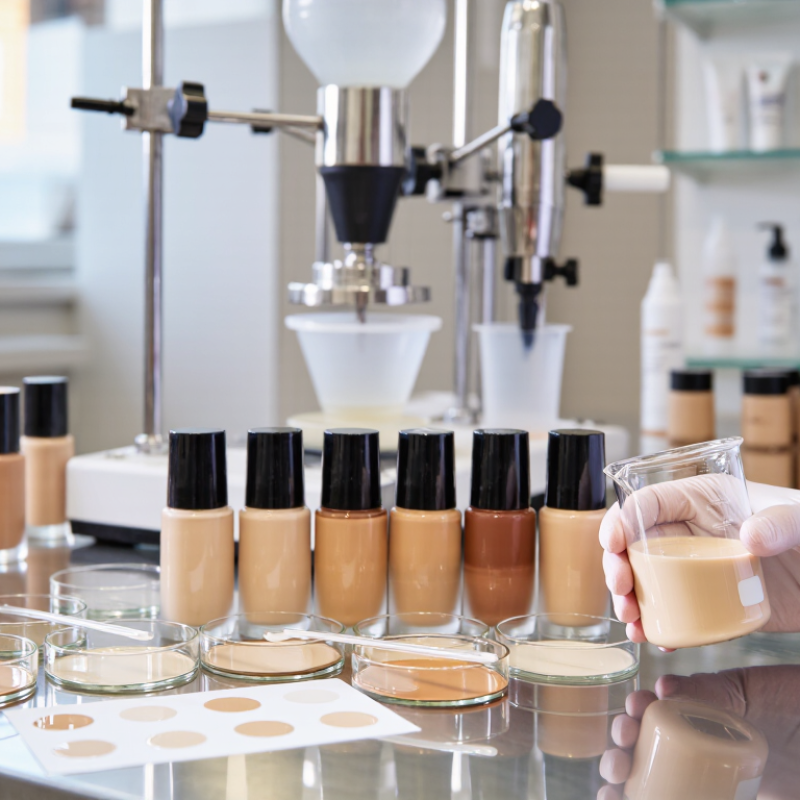
How to Find a Reliable Private Label Foundation Supplier?

Define Your Private Label Foundation Requirements

How to Find a Reliable Private Label Foundation Supplier?

Define Your Private Label Foundation Requirements

Before contacting a private label foundation supplier, prepare a brief you can test. Define coverage, finish, undertone range, shade count, skin types, pack size, and target cost. Be specific. “Natural finish” can mean satin, soft matte, or slightly dewy. Include application details, such as sponge blending, brush performance, and oxidation after eight hours.

Market data shows why precision matters. McKinsey’s 2023 State of Fashion: Beauty report projects the global beauty market could reach about $580 billion by 2027. Cosmetics Europe reported approximately €88 billion in European cosmetics and personal care retail sales in 2023. Competition is growing. Vague requirements are expensive.

For every shade, request an INCI list, pigment specifications, stability results, microbiological testing, and batch traceability. Ask how the formula performs at 5°C, 25°C, and 40°C. Request compatibility testing with the proposed bottle, pump, and cap. In the United States, the FDA explains that cosmetics generally do not require premarket approval, except for color additives. The responsible company must still ensure product safety.

Create acceptance criteria before sampling. A shade should match under daylight, office lighting, and phone-camera conditions.

Test at least three batches when possible. My first instinct would be to prioritize shade appearance, but wear time and packaging compatibility often create bigger problems.

A reliable supplier should discuss limitations openly, not promise perfection. That honesty is useful.

Verify Supplier Credentials, Product Quality, and Safety Standards

A reliable private label foundation supplier should prove more than production capacity. Ask for a current business license, factory address, ownership details, and recent audit records. ISO’s 2023 Survey recorded more than 1.2 million ISO 9001 certificates worldwide, but certification alone does not guarantee strong cosmetic manufacturing. Verify the certificate number with the issuing body. Request an ISO 22716-based Good Manufacturing Practice system, batch traceability, and written handling procedures.

Quality must be visible in documents and samples. Request a full ingredient list, allergen information, microbiological test results, heavy-metal screening, stability data, and packaging compatibility reports. Compare three production samples under normal light and after heat exposure. Check shade consistency, oxidation, separation, pump performance, and label accuracy. Cosmetics Europe reported European cosmetic sales above €100 billion in 2023, showing the scale of consumer demand and the need for disciplined controls. Still, market growth does not prove supplier reliability.

Ask who performs each test and whether the laboratory is independently accredited. Review the latest batch records, not only polished sample reports. I would also place a small pilot order before signing a large contract. That step may feel slow. It can reveal weak filling controls, inconsistent pigment dispersion, or delayed corrective actions. Keep written records of every claim, approval, and revision. A supplier who avoids evidence deserves caution. Personally, I would not treat a low price as efficiency until quality failures, returns, and retesting costs are measured.

Compare Formulation, Packaging, Pricing, and Minimum Order Terms

How to Find a Reliable Private Label Foundation Supplier?

A reliable foundation supplier should explain its formulation process clearly. Ask for ingredient functions, shade development methods, and stability testing records. A professional team can discuss coverage, finish, oxidation, and skin feel without vague promises. Request samples in several shades. Test them under natural light, indoor lighting, and after several hours of wear.

Packaging deserves equal attention. Check the pump, cap, bottle, label area, and leakage resistance. I usually perform repeated opening tests and carry samples in a cosmetic bag. Small faults become expensive complaints later. Confirm whether the supplier can provide compatible packaging samples before production. The first sample may look impressive, but it can still feel inconvenient during daily use.

Pricing should include formula, packaging, filling, printing, testing, and shipping preparation. Ask for a detailed quotation, not only a unit price. Compare minimum order quantities carefully. A lower price may require an excessive order, creating slow-moving inventory. Discuss whether the supplier offers flexible shade quantities or staged production. This point is often overlooked. I once treated a low minimum order as automatically beneficial, but the packaging setup fee changed the real cost. Review payment terms, lead times, sample charges, and defect handling in writing. Trust grows through clear records, responsive answers, and a willingness to admit limitations.

How to Find a Reliable Private Label Foundation Supplier? - Compare Formulation, Packaging, Pricing, and Minimum Order Terms

Comparison framework for evaluating private label liquid, cream, and powder foundation suppliers. Pricing is shown as an indicative bulk benchmark in USD and should be confirmed after formula, shade count, packaging, testing, and shipping requirements are finalized.

Supplier Profile Best-Suited Foundation Type Coverage & Finish Options Typical Formula Development Key Testing & Documentation Primary Packaging Options Indicative Unit Price
(1,000–5,000 Units)
Typical MOQ Sample & Development Terms Production Lead Time Quality & Supply Considerations Overall Fit
Profile A Liquid foundation with buildable coverage Medium to full Natural finish 30–40 shades Existing base formulas can usually be adjusted for undertone, viscosity, oil control, and fragrance-free requirements. Custom development commonly requires several lab rounds. Ingredient declaration, stability testing, microbiological testing, heavy-metal screening where required, and product safety documentation. Glass or plastic bottle; pump or dropper; printed carton; standard cap colors; custom decoration available at higher volumes. $2.20–$4.80 1,000–3,000 units per shade Lab samples often available within 1–3 weeks. Sample fees are commonly credited against a qualifying production order. 8–14 weeks after artwork, formula, packaging, and purchase order approval Confirm shade consistency across batches, pump compatibility, bottle leakage testing, and the method used for accelerated stability testing. ★★★★★
Strong for scalable launches
Profile B Lightweight serum foundation Light to medium Radiant finish 12–24 shades Water-based or emulsion formulas may be customized for hydration, skin feel, transfer resistance, and compatibility with common skincare ingredients. Stability, compatibility, preservative efficacy, microbiological quality, and claims support for general cosmetic benefits. Glass dropper bottle, airless pump, or squeeze tube. Airless packaging is generally preferred for formulas sensitive to air exposure. $2.80–$5.90 2,000–5,000 units per SKU Development typically involves a paid laboratory sample and two or more revision rounds. Custom shade matching may add laboratory charges. 10–16 weeks Review preservative-system performance, separation resistance, dropper dosing accuracy, and compatibility between formula and primary container. ★★★★☆
Best for skincare-led positioning
Profile C Full-coverage matte foundation Medium to full Soft-matte 20–36 shades Pigment load, oil absorption, dry-down time, and transfer resistance can be adjusted. High-pigment formulas require careful mixing and filling controls. Color assessment, viscosity checks, microbial testing, stability testing, packaging compatibility, and batch release specifications. Plastic or glass bottle with pump; shrink band or tamper-evident seal; carton packaging; standard matte or glossy decoration. $1.90–$4.20 1,500–3,000 units per shade Standard samples may be low-cost; custom color development and artwork setup are normally charged separately. 8–12 weeks Request rub-off, oxidation, shade drift, and pump-clogging checks. Confirm whether retain samples are stored for each production batch. ★★★★★
Good for performance-focused ranges
Profile D Compact powder foundation Light to medium Natural-matte 8–18 shades Coverage, press hardness, payoff, oil-control level, and fragrance-free specifications can be adjusted through pigment and binder selection. Pressing consistency, breakage resistance, microbiological testing, shade approval, and packaging drop testing. Single compact, refillable compact, mirror compact, sponge compartment, magnetic pan, and printed carton. $1.40–$3.60 1,000–2,500 units per shade Pressed-pan samples are commonly supplied after formula selection. Custom compact molds may require tooling fees and higher volume. 6–10 weeks Check pan adhesion, pressing uniformity, hinge durability, mirror quality, and powder breakage after transport simulation. ★★★★☆
Efficient for cost-conscious collections
Profile E Clean-positioned foundation formula Light to medium Natural finish 10–20 shades Formulas may be developed without selected ingredients such as mineral oil, certain silicones, or added fragrance, subject to the supplier’s technical capabilities. Full ingredient review, stability, microbiology, preservative efficacy, supplier documentation, and substantiation for permitted cosmetic claims. Recycled-content plastic, glass bottle, paperboard carton, low-ink decoration, and refill-compatible packaging where available. $2.60–$5.50 2,500–5,000 units per SKU Formula screening and certification-related documentation may increase development costs. Approval usually requires a signed specification. 12–18 weeks Verify the exact meaning of terms such as “clean,” “natural,” and “vegan.” Request current raw-material declarations and claim substantiation. ★★★★☆
Suitable for ingredient-conscious brands
Profile F Small-batch startup foundation Light to medium Dewy or natural 4–10 shades Uses pre-developed formulas with limited customization. Shade selection, label artwork, and standard packaging are generally easier than full formula development. Basic stability and microbiological documentation may be available; confirm whether complete regulatory files and batch records are provided. Stock bottle, tube, or compact with digital label or standard printed packaging. Limited custom decoration options. $3.20–$7.50 100–500 units per SKU Faster sampling and lower initial commitment are common. Custom packaging, custom molds, and extensive shade matching may not be available. 4–8 weeks Confirm production capacity, backup raw-material sources, lot traceability, insurance, complaint handling, and the process for managing out-of-specification batches. ★★★★☆
Best for market testing
Evaluation checklist: Compare the complete landed cost, not only the unit price. Confirm formula ownership, ingredient restrictions, shade approval standards, packaging compatibility, testing scope, payment schedule, replacement policy for defective goods, production capacity, lead times, and minimum order quantities for each shade and packaging component.

Evaluate Samples, Communication, Production Capacity, and Lead Times

How to Find a Reliable Private Label Foundation Supplier?

A reliable supplier should provide clear, traceable samples before you discuss large orders. Test the foundation on different skin types, under daylight and indoor lighting. Check coverage, oxidation, texture, scent, and how the formula wears after several hours. Ask for ingredient details, stability information, and packaging samples. A professional supplier should explain limitations instead of promising perfect results. That honesty matters.

Communication reveals operational discipline. Notice how quickly the supplier answers technical questions and records your requested changes. Vague replies can create costly misunderstandings during production. Ask who approves formula adjustments, how defects are handled, and how often progress updates are provided. Production capacity also needs evidence. Request information about monthly output, quality-control procedures, filling equipment, and backup plans during busy periods. Numbers without supporting details are not enough.

Tips: Send the same detailed brief to several suppliers. Compare their answers, not only their prices. Request a pilot order before committing to a large quantity. Confirm minimum order quantities, packaging availability, inspection stages, and payment milestones in writing. Lead times should include sampling, formula approval, component sourcing, production, and final inspection. Leave room for delays. I once underestimated packaging lead time, and the formula approval became irrelevant when cartons arrived late. That mistake was avoidable. A dependable supplier gives realistic timelines, communicates changes early, and accepts documented quality checks.

Confirm Contracts, Compliance, Quality Control, and Long-Term Support

How to Find a Reliable Private Label Foundation Supplier?

A dependable supplier starts with a clear contract, not a friendly sales call. Define the formula, shade range, finish, packaging, minimum order quantity, and delivery schedule. Include ownership of custom formulas and artwork. Add written procedures for defects, delayed shipments, batch changes, and confidential information. Vague promises create expensive problems later.

Compliance needs practical evidence. Request ingredient documentation, product specifications, safety assessments, and relevant manufacturing records. Confirm that the supplier follows appropriate cosmetic manufacturing practices. Check whether product claims have supporting test results. Requirements differ between markets, so ask for documents that match your target countries. A certificate alone is not enough.

Quality control should continue after the first approval. Review pilot samples under daylight, office lighting, and warm studio lights. Test shade consistency, coverage, texture, odor, fill weight, packaging leaks, and stability. One sample I approved looked excellent initially, but it oxidized after two hours. That mistake changed my process. I now request wear tests and retain samples from every production batch.

Long-term support reveals the supplier’s real reliability. Ask who handles complaints, how quickly corrective actions begin, and how formula changes are communicated. Discuss production forecasts and backup packaging options. Keep inspection records and compare each shipment against the approved sample. Good partnerships still need written evidence. Without it, trust becomes difficult to measure.

FAQS

What should I include in a private label foundation brief?

Define coverage, finish, undertones, shade count, skin types, pack size, and target cost. Specify sponge blending, brush performance, and eight-hour oxidation. “Natural finish” needs clearer details.

Which safety and quality documents should I request?

Request the INCI list, pigment specifications, stability results, microbiological testing, and batch traceability. Ask for performance data at 5°C, 25°C, and 40°C. Good records matter.

How should foundation samples be tested?

Test several shades on different skin types. Check them in daylight, office lighting, and phone-camera conditions. Assess coverage, texture, scent, oxidation, and wear after several hours. Do not trust one impressive sample.

What packaging checks are important?

Test the bottle, pump, cap, label area, and leakage resistance. Open and close samples repeatedly. Carry them in a cosmetic bag for several days. Small faults become expensive complaints.

How can I compare supplier pricing accurately?

Request costs for formula, packaging, filling, printing, testing, and shipping preparation. Review minimum order quantities and setup fees. A low unit price may create slow-moving inventory. Not always cheaper.

What production information should a supplier provide?

Ask about monthly output, filling equipment, quality-control stages, and busy-period backup plans. Request evidence supporting production numbers. Numbers alone are weak.

How can communication reveal supplier reliability?

Notice response speed and how technical changes are recorded. Ask who approves formula adjustments and handles defects. Confirm progress updates, inspection stages, and payment milestones in writing. Vague replies deserve caution.

What should a realistic foundation lead time include?

Include sampling, formula approval, component sourcing, production, and final inspection. Leave room for packaging delays. I once underestimated carton timing. That mistake was avoidable.

Conclusion

Finding a reliable Private Label Foundation supplier starts with clearly defining your product requirements, including the desired coverage, finish, shade range, skin type suitability, ingredients, packaging style, and target market. Once these specifications are established, assess potential suppliers by reviewing their credentials, manufacturing experience, product quality systems, safety practices, and relevant compliance documentation. Comparing formulation options, packaging capabilities, pricing, minimum order quantities, and payment terms will help identify a supplier that fits both your product vision and budget.

Before making a final decision, request samples to evaluate texture, coverage, color accuracy, stability, and packaging quality. Pay attention to communication, responsiveness, production capacity, and estimated lead times, as these factors strongly influence the reliability of long-term cooperation. Finally, ensure that contracts clearly define product specifications, testing procedures, quality control responsibilities, delivery conditions, confidentiality, and after-sales support. A dependable supplier should offer transparent communication, consistent production standards, and ongoing assistance as your Private Label Foundation line develops.

Olivia

Olivia

Olivia is a professional marketing specialist with a strong understanding of market trends, customer needs, and effective business communication. As a key contributor to the company’s content and marketing team, she regularly updates the corporate website with informative, practical, and......