MPlus Beauty Hub

Cosmetic Insights &
Industry Trends.

Discover expert articles on makeup formulation, OEM innovations, and global beauty events.

Formulation Science

Color Cosmetics
Excellence.

Stay informed with cutting-edge developments from our Milan R&D laboratories.

Manufacturing Expertise

Pioneering
Beauty Solutions.

Exploring next-generation applicators, sustainability, and private label growth strategies.

0%

Glitter eyeshadow looks effortless on the eyelid, yet dependable performance begins long before application. Glitter Eyeshadow Formulation requires controlled particle selection, binder compatibility, color stability, and careful packaging decisions. A cosmetic chemist may spend hours checking whether particles settle, clump, or lose sparkle after repeated opening.

Perry Romanowski, a veteran cosmetic chemist and educator, describes formulation as “a balance of science, art, and business.” That balance matters to global buyers. A shade must remain attractive, but it also needs consistent batch quality, suitable ingredient documentation, and responsible safety evaluation for its intended market. Supplier communication cannot stop at a color card. Buyers should request particle specifications, purity information, usage guidance, and stability data. Small details matter.

A formula can look perfect in a sample jar and still fail during shipping. Heat, humidity, vibration, and repeated consumer handling may expose weaknesses. This is where practical testing becomes valuable. Check fallout on different skin types. Observe the surface after several weeks. Inspect the pan, seal, applicator, and outer carton. Do not assume one glitter material suits every market or formula base. That assumption is easy to make—and often wrong.

The seven tips ahead examine these decisions from a buyer’s perspective. They connect visual impact with manufacturability, documentation, user experience, and regional expectations. Some recommendations may require adjustment. Real formulation work is rarely perfectly linear. Reliable results come from testing, recording, questioning, and improving each batch.
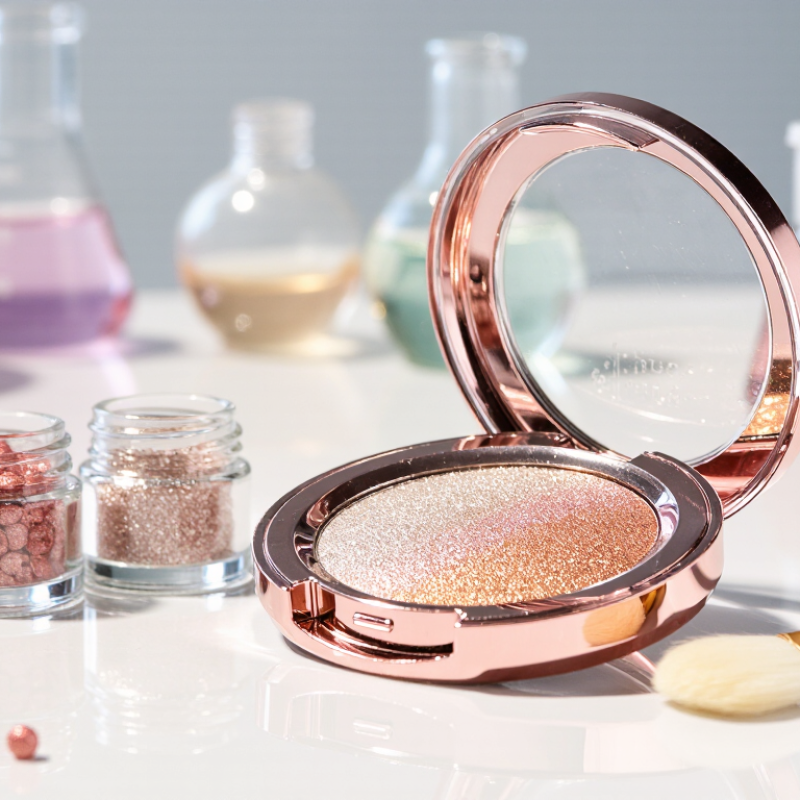
7 Glitter Eyeshadow Formulation Tips for Global Buyers?

Understanding Glitter Eyeshadow Types and Global Buyer Requirements

7 Glitter Eyeshadow Formulation Tips for Global Buyers

Understanding glitter eyeshadow types is essential before discussing color, shine, or packaging. Pressed glitter usually offers strong payoff and controlled application. Loose glitter creates brighter effects but needs better containment. Gel-based glitter feels smoother and supports quick, even spreading. Cream formulas can improve comfort, although they may crease on oily eyelids.

Use only cosmetic-grade particles intended for the eye area. Craft glitter is not an acceptable substitute. Particle shape, size, and edge smoothness affect comfort and safety. A reliable formula should balance sparkle with adhesion. Too much binder can dull the finish. Too little may cause fallout. This remains a common formulation compromise.

Global buyers also inspect documentation, ingredient naming, safety assessments, and batch consistency. Requirements differ across markets, so one universal compliance file may be insufficient. Ask for stability data, microbial results, heavy metal controls, and packaging compatibility. Clear labeling should cover net weight, shelf life, usage guidance, and warnings. Some buyers prefer biodegradable glitter, but its performance can vary. It may feel less reflective than conventional particles. That difference should be tested, not hidden.

Small details matter. A sample can look beautiful under studio lights but fail during daily wear. Test it on moving eyelids, under humidity, and after several hours. Buyer feedback may expose weaknesses that laboratory checks miss. Not every “high-shine” formula is comfortable. That lesson is easy to overlook.

Selecting Cosmetic-Grade Glitter and Compatible Supporting Ingredients

Global eye makeup demand keeps raising formulation expectations. Cosmetics Europe reported €88.8 billion in European cosmetics retail sales in 2023. Grand View Research estimated the global eye makeup market at approximately USD 17.4 billion in 2023. These figures signal strong opportunity, but glitter performance cannot rely on visual sparkle alone.

Choose cosmetic-grade glitter with documented eye-area suitability, a controlled particle-size distribution, smooth edges, and reliable colorant compliance. Ask suppliers for INCI details, certificates of analysis, heavy-metal limits, microbial results, and batch traceability. Craft glitter is not an acceptable shortcut.

Supporting ingredients determine whether glitter adheres or falls onto the cheek. In pressed shadows, combine the glitter with a balanced binder system, such as treated oils, waxes, and film-forming agents. Excess oil can weaken the pan. Too much wax can create drag during application.

For loose formulas, use lightweight powders that improve flow without hiding reflectivity. Synthetic mica or approved mineral effect pigments may support visual depth, but compatibility must be tested separately. Check odor, color shift, sedimentation, and removal after repeated wear. Small details matter.

Pilot batches should undergo adhesion, rub, drop, and stability testing at different temperatures. A 40°C storage screen can expose binder separation quickly. I would also test several brush types, because application tools change fallout dramatically.

One practical weakness remains: laboratory stability may not predict humid bathroom use. Recheck consumer handling before approval. Global buyers should align every ingredient and claim with the destination market’s current cosmetic regulations.

Balancing Texture, Adhesion, Pigment, and Wear Performance

Global buyers judge glitter eyeshadow by touch before performance. Texture must feel smooth, not sandy or overly oily. A 2024 Grand View Research report estimated the global color cosmetics market at about USD 70 billion in 2023. That scale increases pressure on suppliers to deliver consistent batches across climates. Humidity can soften a cream base. Dry air can weaken adhesion.

Tip 1: Balance particle size with binder strength. Fine shimmer usually feels elegant, while larger glitter creates stronger visual impact. However, excessive sparkle can cause fallout around the eyes. Use an eye-area suitable effect material and confirm particle safety through supplier documentation. Pigment load also needs control. Too little looks dull. Too much can reduce spreadability. Small panel tests reveal this quickly.

Tip 2: Test adhesion under heat, sweat, and rubbing. A 2023 Circana beauty analysis showed continued consumer interest in makeup performance and premium sensory experiences. Buyers therefore expect color payoff and reliable wear, not attractive swatches alone. Compare film formation after eight hours. Check creasing, transfer, and removal comfort. I would not trust one climate chamber result. Real users often apply different amounts, and that changes everything.

Tip 3: Build a global test matrix. Include cold, heat, high humidity, and repeated opening. Measure pigment uniformity after transport vibration. Evaluate the formula in both finger and brush application. A glossy finish may impress online but feel sticky in practice. That mismatch matters. Keep records for raw material lot changes, microbial testing, and stability observations. Some failures appear only after weeks, which is inconvenient but honest.

7 Glitter Eyeshadow Formulation Tips for Global Buyers

Balancing texture, adhesion, pigment intensity, and wear performance across different markets.

The chart uses a practical 1–10 formulation-priority scale for development planning. Adhesion, pigment dispersion, transfer resistance, and regulatory suitability are weighted heavily because they directly influence application quality, consumer safety, and international market acceptance. The scores are non-brand benchmark values rather than company or market-share data.

Adapting Formulas to Regional Regulations and Consumer Preferences

Global glitter eyeshadow buyers need more than intense sparkle. They need formulas that fit local rules and daily habits. In formulation reviews, I begin with cosmetic-grade glitter and verified pigment documentation. Confirm each colorant’s permitted use, concentration, and particle specifications for the target market. Requirements can differ across Europe, North America, the Gulf region, and Asia. Never assume one approval covers every destination.

Keep the particles smooth and suitable for the intended eye area. Match the base to regional climates, from humid storage rooms to dry winter air. A soft cream may suit some users, while a pressed powder can offer easier transport. Reduce fallout with balanced binders, but avoid a heavy, waxy feel. Offer shades that complement varied skin tones. Consider fragrance-free options, sensitive-eye expectations, and local preferences for subtle or dramatic shimmer. Small details matter.

Test stability under heat, cold, humidity, and repeated opening. Check adhesion, color migration, microbial quality, and packaging compatibility. Review ingredient lists, safety assessments, labels, and supplier certificates before shipment. Clear records support reliable decisions. Some teams focus too heavily on sparkle and test wear too late. That is a costly weakness. I have also seen attractive formulas fail because the compact cracked during transport. Regional feedback should guide adjustments, even when it challenges the original concept. Preferences are not universal. Neither are regulations.

Testing, Packaging, Labeling, and Scaling for International Markets

7 Glitter Eyeshadow Formulation Tips for Global Buyers

Testing, Packaging, Labeling, and Scaling for International Markets

Glitter eyeshadow must survive more than a color check. Test adhesion, fallout, particle distribution, and blendability on several skin types. Examine the formula after heat, cold, humidity, and repeated opening. A smooth sample can still separate during shipping. Microbial and preservative testing should match the product format and target markets. Small flaws become expensive recalls or customer complaints.

Tips: Use sealed samples during transport tests. Check every shade under daylight and indoor lighting. Record texture changes weekly. Do not rely only on a first-day approval. That shortcut often creates problems later.

Packaging needs careful engineering. Choose a container that limits powder movement and protects the pan from impact. Test the closure after drops, vibration, and temperature changes. A secure seal matters in humid regions. Labels should show ingredients using accepted naming standards, net quantity, batch information, shelf-life details, and suitable warnings. Translation quality also matters. One awkward phrase can reduce buyer trust. Requirements differ by country, so review current local guidance with a qualified regulatory specialist.

Scaling requires more than multiplying the laboratory formula. Mixing order, glitter loading, compression pressure, and filling speed can change the finish. Run a pilot batch before full production, then compare it with the approved sample. Keep retain samples from each batch. I have seen teams overfocus on sparkle and undercheck usability. That balance deserves another review.

7 Glitter Eyeshadow Formulation Tips for Global Buyers? - Testing, Packaging, Labeling, and Scaling for International Markets

No. Formulation & Testing Focus Recommended Specification or Test Packaging Consideration Labeling and Regulatory Check International Scaling Guidance
1 Use eye-area suitable glitter Use cosmetic-grade glitter or approved effect pigments specifically documented for eye-area use. Do not substitute craft glitter. Review particle shape, composition, color additive status, and supplier safety documentation. Choose a container that minimizes loose particle escape, such as a sifter, press-fit pan, or well-sealed jar. Avoid sharp edges that may contact the eyelid. Confirm that each pigment is permitted for the intended cosmetic use in the destination market. Color additive permissions can differ between the EU, United States, United Kingdom, Japan, and other markets. Maintain a raw-material dossier containing INCI name, color index where applicable, technical data, safety information, lot traceability, and eye-area suitability evidence.
2 Control adhesion and fallout Evaluate pickup, payoff, blendability, fallout, transfer, and wear after application. Compare results on multiple skin tones and with common application methods, including brush, finger, and damp applicator. Use a closure and inner seal that reduce powder movement during transport. Check shake testing, drop testing, vibration, and repeated opening and closing. Avoid unsupported claims such as “zero fallout,” “waterproof,” or “all-day wear” unless the claim is supported by documented testing appropriate to the target market. Set measurable internal acceptance criteria, such as acceptable fallout rating, minimum pan adhesion, and maximum visible breakage after distribution simulation.
3 Run stability and compatibility testing Assess appearance, odor, color, texture, pay-off, adhesion, and microbial quality under real-time and accelerated conditions. A commonly used accelerated condition is 40°C/75% relative humidity, but the final protocol should reflect the formula and market. Test the filled product in the final pack, including pan, adhesive, gasket, sifter, cap, decoration, and label. Inspect for pigment migration, cracking, leakage, swelling, and closure failure. Define shelf-life and period-after-opening information only after reviewing stability evidence and applicable local rules. Packaging claims must not conflict with the product’s tested durability. Include transport conditions for hot, humid, cold, and dry regions in the risk assessment. Keep retained samples from each pilot and commercial batch for comparison.
4 Build compliant global labeling Prepare a market-specific label matrix covering product identity, net contents, ingredient declaration using accepted INCI terminology, responsible party details, batch code, durability information, warnings, and country-specific language requirements. Reserve enough label area for mandatory information without reducing legibility. Confirm that small jars, pans, cartons, and inserts can carry required details when space is limited. The EU, United Kingdom, United States, and other markets use different regulatory systems. For example, EU cosmetics generally require compliance with Regulation (EC) No. 1223/2009, while U.S. requirements include applicable FDA rules and MoCRA obligations. Do not reuse one global label without a regulatory review. Use controlled artwork versions, translation checks, barcode verification, and approval records for every market.
5 Protect the product during distribution Use a documented packaging performance plan covering compression, vibration, free-fall or drop, seal integrity, abrasion, and temperature exposure. Define pass/fail limits before testing begins. For loose or high-shimmer powders, consider an inner lid, tamper-evident seal, protective carton, and secure tray fit. Select materials compatible with oils, esters, binders, and volatile ingredients. Review packaging statements such as recyclable, refillable, or biodegradable against the actual material composition and the recycling infrastructure of the destination market. Test representative shipping configurations, not only individual units. Record pallet pattern, carton dimensions, gross weight, and environmental exposure for export planning.
6 Scale the process with controlled parameters Document order of addition, mixing time, screen or sieve specification, compression force where applicable, fill weight, moisture control, and in-process sampling. Confirm that scale-up does not change particle distribution or payoff. Verify equipment contact materials, dust control, fill accuracy, pan alignment, sealing performance, and line clearance. Glitter particles can influence cleaning time and cross-contamination controls. Maintain batch records and retain samples. Manufacturing should follow appropriate cosmetic good manufacturing practice, such as the principles described in ISO 22716. Use a staged scale-up: laboratory batch, pilot batch, validation batch, then commercial production. Compare critical quality attributes at every stage before release.
7 Plan market release and post-market control Complete safety assessment, claim substantiation, packaging review, and market-specific notification or registration steps where required. Establish a complaint procedure for irritation, foreign-particle concerns, breakage, and leakage. Make batch coding readable after decoration and compatible with the selected substrate. Ensure the code remains traceable through secondary packaging and export cartons. Prepare warnings appropriate to the product and market, such as external-use guidance and avoiding direct contact with the eye when applicable. Use translated instructions reviewed by qualified personnel. Create a market launch checklist covering documentation, artwork approval, samples, customs information, shipping classification, product insurance, distributor training, and adverse-event escalation.

Note: Cosmetic requirements, permitted colorants, labeling rules, notification procedures, and claims standards vary by destination market. Confirm the final formula and artwork with qualified regulatory professionals before sale.

FAQS

What makes glitter suitable for eye makeup?

Choose cosmetic-grade glitter with smooth edges and controlled particle sizes. Confirm eye-area suitability through supplier documentation. Craft glitter is unsuitable.

Which documents should buyers request from suppliers?

Request INCI details, certificates of analysis, heavy-metal limits, microbial results, and batch traceability. Records matter.

How can a pressed glitter eyeshadow reduce fallout?

Use balanced oils, waxes, and film-forming agents. Excess oil may weaken the pan. Too much wax can feel draggy.

What should loose glitter formulas contain?

Lightweight powders can improve flow without hiding reflectivity. Test synthetic mica or approved mineral effect pigments separately.

Which tests should a glitter formula pass?

Test adhesion, rub resistance, drop survival, blendability, and stability. Use several brushes. Tools change fallout noticeably.

How should formulas be tested for international markets?

Check heat, cold, humidity, repeated opening, color migration, and microbial quality. A 40°C screen can reveal binder separation quickly.

What packaging details protect glitter eyeshadow during shipping?

Use a container that limits powder movement and protects the pan. Test drops, vibration, closure strength, and temperature changes.

What information should appear on the product label?

Include accepted ingredient names, net quantity, batch information, shelf-life details, translations, and suitable warnings. Local requirements differ.

How can regional preferences influence formula development?

Offer shades for varied skin tones, fragrance-free options, and different shimmer levels. Creams may suit some users; pressed powders transport better.

What common development mistake deserves reconsideration?

Teams often focus on sparkle and test wear or transport too late. I would question that priority. Test it again.

Conclusion

Glitter Eyeshadow Formulation requires a careful balance of visual impact, safety, stability, and user experience for international markets. Buyers should first understand the differences between pressed, loose, cream, and liquid glitter eyeshadows, then select cosmetic-grade glitter with compatible binders, emollients, pigments, preservatives, and other supporting ingredients. The formula should provide a smooth texture, reliable adhesion, strong color payoff, minimal fallout, comfortable wear, and easy application without compromising eye-area safety.

For global distribution, formulators must consider regional ingredient restrictions, labeling expectations, cultural preferences, climate conditions, and consumer demand for finishes ranging from subtle shimmer to bold sparkle. Thorough testing should evaluate stability, microbial quality, packaging compatibility, adhesion, wear time, and performance under varied temperatures and humidity. Clear ingredient labeling, suitable packaging, controlled manufacturing, and gradual production scaling can help ensure consistent quality and a dependable product experience across different markets.

Olivia

Olivia

Olivia is a professional marketing specialist with a strong understanding of market trends, customer needs, and effective business communication. As a key contributor to the company’s content and marketing team, she regularly updates the corporate website with informative, practical, and......