MPlus Beauty Hub

Cosmetic Insights &
Industry Trends.

Discover expert articles on makeup formulation, OEM innovations, and global beauty events.

Formulation Science

Color Cosmetics
Excellence.

Stay informed with cutting-edge developments from our Milan R&D laboratories.

Manufacturing Expertise

Pioneering
Beauty Solutions.

Exploring next-generation applicators, sustainability, and private label growth strategies.

0%

Lip Makeup OEM Services help brands turn a product idea into finished lipsticks, glosses, balms, or liners. The process usually begins with a brief: target customer, finish, shade range, price point, packaging, and launch schedule. A contract manufacturer then assesses what is feasible and develops or adapts formulas. Cosmetic chemist Perry Romanowski has written extensively about cosmetic formulation and product development. A useful guiding principle for this process is: “A promising formula must perform beyond the sample stage.” That is an editorial summary, not a direct quotation.

Development becomes tangible in the details. A lipstick may feel creamy in a warm studio, then soften during transit. A gloss can look vivid in a clear tube but apply differently on the lips. Manufacturers prepare samples, refine texture and color, and check how formulas work with selected packaging. Stability, compatibility, and quality checks help identify problems before larger production runs. Small details matter.

OEM services can vary. Some manufacturers offer ready-made bases and standard packaging; others support custom formulas, shade matching, and packaging development. Brands should ask who owns the formula, what testing is included, how changes are approved, and what minimum order quantities apply. Clear answers reduce costly surprises, though they cannot remove every risk. A sample is not proof that every production batch will feel identical. That deserves a second look. Understanding the workflow helps brands make informed choices and set realistic expectations before committing to production.
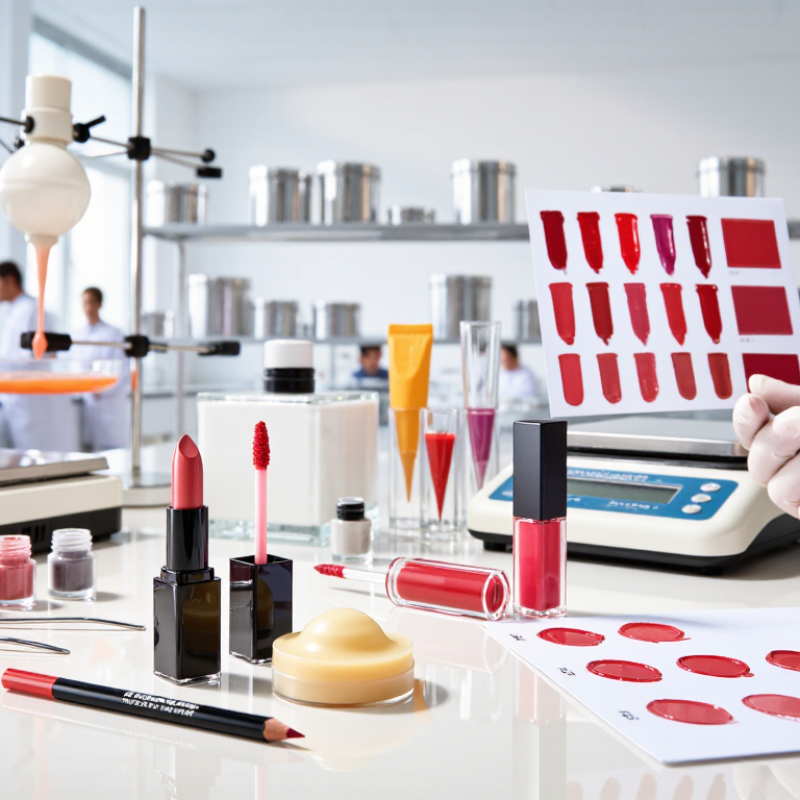
What Are Lip Makeup OEM Services and How Do They Work?

What Lip Makeup OEM Services Include

Lip makeup OEM services help a business turn a product brief into finished lip products made to agreed specifications. The brief may describe a sheer tint, creamy lipstick, or long-wear liquid color. It can also set targets for shade, finish, fragrance, and application feel. An OEM team reviews these requirements and discusses which formulas and components are practical.

Formulation work may include selecting pigments, oils, waxes, and other cosmetic ingredients. The manufacturer can prepare samples for review, then adjust color payoff, glide, or wear based on feedback. The first sample is rarely perfect. A warm red may look cooler under store lighting, so testing it in different conditions matters.

Packaging development is another part of the service. Teams may assess tube size, applicator shape, closure fit, and compatibility between the formula and container. After approval, production planning covers batch quantities, filling, labeling, and quality checks.

These can include visual inspection, fill-weight checks, and records that help trace each batch. Timelines and available tests vary by manufacturer, so buyers should confirm the details before production begins. A small change in texture can require another sample round, and that can affect the schedule.

How Brands Define Product and Customization Requirements

Lip makeup OEM planning begins with a product brief, not a shade chart alone. Brands define the intended user, price range, finish, wear time, and preferred format. For a lipstick, that may mean a muted rose shade, satin finish, and a bullet that applies evenly without tugging. They should also specify sensory preferences, such as fragrance level and how creamy the formula should feel. Small details matter.

Personalization can shape these decisions. McKinsey & Company’s 2021 Next in Personalization report found that 71% of consumers expected personalized interactions, while 76% felt frustrated when they did not receive them. These figures cover consumers broadly, not lip products alone. They still underline why a clear audience and use case matter. An OEM supplier can then assess ingredient options, packaging compatibility, minimum order quantities, and production feasibility against the brief.

Turn preferences into testable criteria: shade tolerance, payoff after one swipe, wear checks, and component dimensions. Request lab samples and assess them under consistent lighting; warm store lights can distort color judgments. Ask suppliers to document formula revisions and stability testing. One common weak spot is changing several requirements at once. It makes feedback harder to interpret. A sample may look right but feel too waxy, so record both observations before requesting another iteration.

How an OEM Partner Develops and Samples Lip Products

An OEM lip project often begins with a product brief, not a finished formula. The brief should describe the target user, finish, price range, shade direction, and preferred format. A product developer turns those details into a workable starting point, balancing pigments, oils, waxes, and the intended feel. Shade references help, but they do not always reproduce accurately across materials. Small details matter. A lipstick that looks warm in a digital image may appear cooler in a real sample. Packaging dimensions also affect how a formula fits and applies.

The first lab sample is a test, not a promise. The buyer checks color, glide, payoff, scent, and wear, then shares specific feedback. “Less drag” is more useful when paired with a clear comparison or application note. The OEM team adjusts the formula or shade and prepares another sample for review. Not quite right. That is normal, though repeated changes can extend development. Samples should also be assessed under consistent lighting and, where relevant, checked for stability and compatibility with the chosen packaging. Notes from each round help both sides track what changed and why. A useful partner explains trade-offs plainly, such as how a softer texture may affect staying power, instead of treating every preference as easy to meet.

How Manufacturing, Quality Control, and Packaging Work

Lip makeup OEM services turn a product brief into a manufactured item, from formula selection to filled tubes and cartons. The manufacturer and client agree on shade targets, texture, component sizes, and production quantities. A pilot batch helps reveal problems before larger runs. A red may look warm in a lab sample but appear cooler under store lighting. Small details matter. Grand View Research estimated the global cosmetics packaging market at USD 34.8 billion in 2023, with projected annual growth of 4.2% through 2030. This signals packaging’s commercial importance, though it does not guarantee any specific component’s performance.

During production, teams weigh ingredients, mix the formula, and monitor filling conditions. Quality checks may include shade comparison, weight checks, closure tests, and stability testing under different temperatures. ISO 22716 provides cosmetics Good Manufacturing Practices guidance for production, control, storage, and shipment.

Ask how a supplier documents batch records, handles deviations, and tests packaging compatibility. A formula can change when it contacts a tube or applicator. Not glamorous, but essential.

Packaging checks can assess leakage, cap fit, label placement, and carton protection during transport. A neat outer box is not proof of a reliable product; real testing matters. And some issues only appear after time, so review the evidence, not just a polished sample.

How Finished Products Meet Regulatory and Market Requirements

Lip makeup OEM services cover more than filling lipstick into tubes. A capable manufacturer helps translate a brief into a formula, packaging specification, and market-ready documentation. The finished product must meet the rules of each intended market. In the European Union, Regulation (EC) No 1223/2009 requires a safety assessment, product information file, responsible person, and notification before sale. In the United States, MoCRA adds requirements including facility registration and product listing, with certain exemptions.

Testing makes those obligations practical. OEM teams commonly review ingredient restrictions, verify color additives for the intended use, assess stability, and check formula compatibility with packaging. A red shade may look identical in a sample and production batch, yet pigment variation can affect consistency. Microbiological testing and documented manufacturing controls also matter. ISO 22716 provides cosmetics good manufacturing practice guidance. Details matter. The contract should clearly assign who prepares, approves, and retains each compliance record.

Market data helps explain the pressure for reliable execution. Cosmetics Europe’s 2024 market report put European cosmetics and personal care sales at €96 billion in 2023. Grand View Research estimated the global lip-care market at about US$2.8 billion that year; lip care is adjacent to, but not the same as, lip makeup. These figures signal a crowded category, not guaranteed demand. Claims such as “long-wear” need suitable evidence, while labels must match local rules. And even a complete dossier can miss a practical issue: whether the cap stays clean after repeated use.

FAQS

What should a lip makeup product brief include?

Define the intended user, price range, finish, wear time, and product format. Add shade, fragrance level, and preferred creaminess. Small details matter.

How can preferences become testable requirements?

Set a shade tolerance, one-swipe payoff target, and wear checks. Record component dimensions too. Use consistent lighting; warm store lights can distort colors.

What should teams assess when reviewing lab samples?

Check color, application, texture, and packaging fit. A sample may look right but feel too waxy. Note both before requesting changes.

Why change only a few requirements at a time?

Changing several things makes feedback harder to interpret. Adjust one or two variables, then compare samples. It takes longer, perhaps, but gives clearer clues.

What market requirements may apply before sale?

Requirements vary by intended market. Teams may need safety assessments, product documentation, notifications, and facility or product records. Confirm who prepares and retains each record.

Which tests and manufacturing checks are useful?

Review ingredient restrictions and color-additive suitability. Check stability, packaging compatibility, microbiological quality, and documented manufacturing controls. Paperwork alone is not enough.

How should packaging be tested?

Check whether the formula works with the tube and other components. Open and close the cap repeatedly. Does it stay clean? That small issue can be missed.

What evidence is needed for product claims and market estimates?

Claims such as “long-wear” need suitable evidence, and labels should match local rules. Market estimates show competition, not guaranteed demand. Lip care figures are not the same as lip makeup sales.

Conclusion

Lip Makeup OEM Services help businesses turn a product idea into finished lip products through a coordinated development and manufacturing process. The work typically begins with defining the product type, desired textures, shades, ingredients, performance goals, packaging, and order requirements. These details guide the OEM partner in proposing suitable formulations and customization options, while keeping the project’s specifications clear.

After requirements are agreed, the partner develops samples for review and refinement before moving into production. Manufacturing is supported by quality checks at relevant stages, from ingredient and packaging verification to inspection of finished products. Packaging is prepared according to the agreed design and product specifications. Before products are supplied to a target market, documentation, labeling, and other requirements are reviewed to help ensure they are appropriate for that market. This process gives businesses a structured path from concept and sampling through production and delivery.

Ethan

Ethan

Ethan is a professional marketing specialist dedicated to helping businesses understand how thoughtful products and practical solutions can create lasting value. With a strong knowledge of the company’s offerings, he translates complex features into clear, useful insights that support informed......