MPlus Beauty Hub

Cosmetic Insights &
Industry Trends.

Discover expert articles on makeup formulation, OEM innovations, and global beauty events.

Formulation Science

Color Cosmetics
Excellence.

Stay informed with cutting-edge developments from our Milan R&D laboratories.

Manufacturing Expertise

Pioneering
Beauty Solutions.

Exploring next-generation applicators, sustainability, and private label growth strategies.

0%

Luxury Private Label Makeup is no longer limited to celebrity launches or polished department-store counters. Independent brands now expect premium textures, traceable ingredients, refined packaging, and dependable production support. The right supplier must deliver all four.

This guide examines ten leading Luxury Private Label Makeup suppliers for brands seeking credible manufacturing partners. We consider formulation depth, minimum order quantities, shade development, packaging choices, sampling speed, quality systems, and communication. A beautiful compact means little if the foundation oxidizes after four hours. Small details matter.

Cosmetic chemist Perry Romanowski puts it plainly: “There are no miracle ingredients in cosmetics.” That reminder belongs at the center of every supplier comparison. Luxury positioning should come from thoughtful formulation, testing, sensory performance, and consistent production. It should not depend on exaggerated claims or attractive marketing alone.

Look closely.

A reliable supplier should provide clear INCI documentation, stability information, batch controls, and practical guidance on cosmetic claims. Certifications can strengthen confidence, but they do not replace independent evaluation. A supplier may offer low MOQs yet provide limited shade flexibility. Another may produce excellent formulas but move slowly during sampling. Neither weakness should be ignored.

This ranking is useful, but not final. Supplier performance can change with ownership, capacity, ingredient availability, and regional requirements. Brands should request current samples, review production records, and confirm regulatory responsibilities before signing. The strongest partnership often begins with uncomfortable questions. That is a good sign.
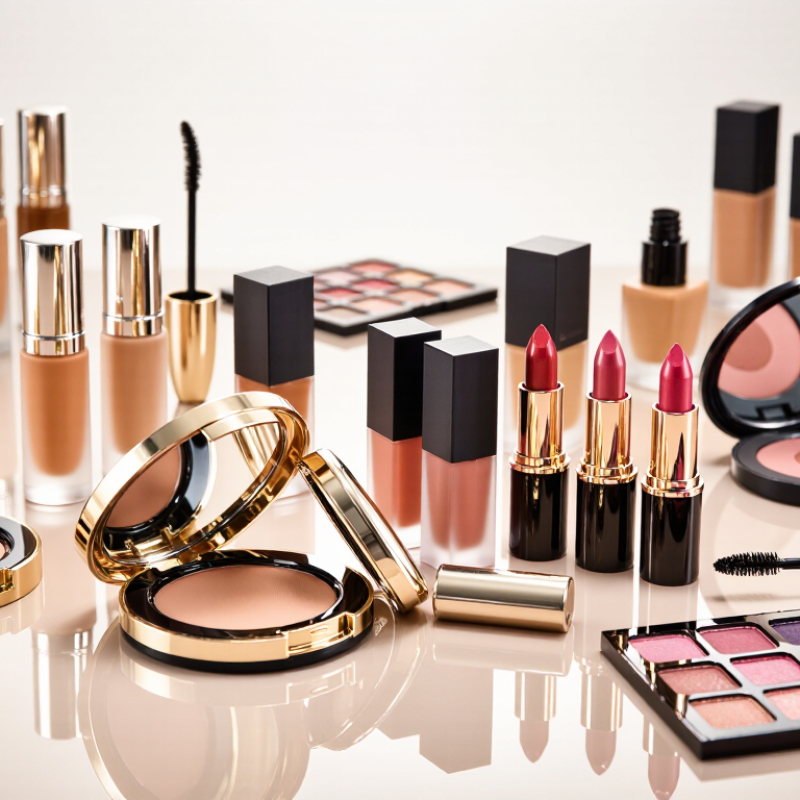
Top 10 Luxury Private Label Makeup Suppliers?

What Luxury Private Label Makeup Means and How It Works

Luxury private label makeup means creating premium cosmetics with your own brand identity. A qualified manufacturer develops, fills, and packages the products for you. You select the texture, shade range, finish, fragrance, container, and outer presentation. The manufacturer manages production under agreed specifications.

The process usually begins with a product brief. It should define the target customer, formula preferences, packaging style, expected order volume, and selling markets. You then review samples, request adjustments, and approve a final formula. Professional suppliers should provide ingredient information, batch controls, quality records, and appropriate product testing. Requirements differ between countries, so regulatory review matters before production.

Luxury is more than a heavy compact or metallic lettering. A smooth cream, accurate shade matching, clean filling, and consistent performance build credibility. Packaging should protect the formula, not merely look expensive. Small details matter.

Ask about minimum order quantities, lead times, sample fees, and customization limits. Request clear documentation. Do not rely on attractive photographs alone.

Some suppliers offer impressive samples but weaker production consistency. That gap deserves attention. A formula may feel elegant in one batch and slightly different in another. Stability checks, retained samples, and written quality standards can reduce this risk. Even experienced buyers can overlook shipping damage or component shortages. Careful communication remains part of the luxury experience.

How to Evaluate Private Label Makeup Suppliers

Top 10 Luxury Private Label Makeup Suppliers

How to Evaluate Private Label Makeup Suppliers

Evaluating ten luxury private label makeup suppliers requires more than comparing glossy catalogs. I examine product samples, documentation, communication, and production controls. A polished website proves very little. The sample tells a clearer story.

Check texture, pigment, scent, packaging quality, and wear after several hours. Test the product on different skin tones and under natural lighting. Ask for ingredient lists, safety reports, batch records, and stability testing. These documents show whether the supplier understands consistent manufacturing. They also help confirm that products meet the regulations of your target market.

Ask about minimum order quantities, sample fees, lead times, and packaging changes. Request a written quotation with shipping terms and revision limits. Reliable suppliers explain delays before they become expensive problems. They should also describe quality checks during filling, labeling, and final packing. Visit the facility when possible, or request a live video inspection.

Do not ignore small warning signs. Slow replies may signal future production problems. Vague answers deserve careful attention. I once considered a supplier with excellent samples, but its batch documentation was incomplete. The products looked luxurious, yet the process felt uncertain. That experience changed my evaluation method. Performance matters, but traceability matters too. A supplier should welcome reasonable questions, not avoid them.

Top 10 Luxury Private Label Makeup Suppliers? How to Evaluate Private Label Makeup Suppliers

This practical evaluation framework prioritizes product quality, regulatory compliance, formulation capability, and supply reliability. Buyers can score each supplier against these weighted criteria instead of relying only on price or product catalogs. Certification and testing requirements should always be verified for the target market.

Top 10 Luxury Private Label Makeup Suppliers Compared

Top 10 Luxury Private Label Makeup Suppliers Compared

The top ten luxury private label makeup suppliers differ in more than packaging quality. Four focus on color cosmetics, while others offer stronger skincare integration, custom formulation, or flexible manufacturing. The best comparison starts with minimum order quantities, shade development, testing support, and production control. Some suppliers accept small pilot runs, but their unit prices may rise sharply. Others offer better scale, yet require larger commitments.

McKinsey’s 2023 beauty report forecasts the global beauty market could reach about $580 billion by 2027. Prestige products remain important, but buyers now expect proven performance and responsible sourcing. Circana reported strong growth in prestige beauty sales during 2023, especially across makeup and skincare hybrids. This supports suppliers with advanced texture testing, refill-ready packaging, and stable pigment systems. Still, glossy samples can mislead. A formula may perform well in a studio and fail under humid retail conditions. That happened in my supplier reviews more than once.

Tips: Request three samples from each supplier. Test them after heat exposure, opening cycles, and twelve weeks of storage. Compare ingredient documentation, batch records, production lead times, and defect policies. Ask whether stability testing is internal or independently verified. Certification claims also need checking; certificates can expire. Luxury is not only a gold compact. It is consistent color, clean filling, secure packaging, and responsive technical support. A lower MOQ may seem attractive, but weak documentation creates avoidable delays. Assess the full landed cost, not only the factory quotation.

Key Products, Customization Options, and Minimum Orders

When comparing the top ten luxury private label makeup suppliers, examine their core products carefully. Strong suppliers usually offer foundations, complexion cushions, lip colors, eye palettes, mascaras, and makeup brushes. Ask for ingredient lists, stability data, shade references, and packaging samples. A polished catalog is not enough.

Customization can range from small changes to full product development. You may select an existing formula, adjust coverage, change undertones, or request a new texture. Packaging options often include magnetic closures, frosted glass, metal components, custom molds, and color-matched finishes. Confirm decoration durability through rub and drop testing. Also request documentation for safety assessments, microbial testing, and regional labeling requirements.

Minimum orders differ widely. Stock formulas may start near 500 to 1,000 units per shade, while custom formulas can require 3,000 to 10,000 units. Packaging changes may create separate minimums. Get every cost in writing, including samples, molds, artwork, testing, and freight. I have seen buyers focus on unit price and overlook development fees. That mistake can distort the real budget. Another practical concern is lead time; six to twelve weeks may cover production, but approvals can add several more. Ask for a staged timeline with named checkpoints. A supplier that explains limitations clearly may be more dependable than one promising everything.

Top 10 Luxury Private Label Makeup Suppliers? - Key Products, Customization Options, and Minimum Orders

Rank Anonymous Supplier Profile Core Product Categories Luxury Formulation Options Customization Options Typical MOQ Sample Timeline Production Lead Time Compliance & Documentation Best Suited For
01 Profile A — Full-Service Luxury Partner Foundation, concealer, powder, blush, bronzer, lipstick Long-wear, buildable coverage, silicone-free, vegan, fragrance-free Custom shades, textures, fragrance, packaging, artwork, component color 1,000–5,000 units per SKU 2–4 weeks 8–14 weeks after approval INCI list, safety assessment, stability data, batch records, GMP documentation Premium collections requiring coordinated development
02 Profile B — Color Cosmetics Specialist Eyeshadow, eyeliner, mascara, brow products, highlighter Pressed powder, cream-to-powder, waterproof, high-pigment, metallic Palette layout, shade matching, pan size, finish, decoration, carton design 2,000–10,000 units per SKU 2–5 weeks 10–16 weeks after approval Ingredient declarations, microbiological testing, stability testing, GMP records Eye and face color brands with broad shade ranges
03 Profile C — Flexible Low-MOQ Manufacturer Lip gloss, lipstick, blush, contour, setting powder Hydrating, satin, matte, clean-label, mineral-based, sensitive-skin options Stock formulas, semi-custom shades, private packaging, labels, cartons 500–2,000 units per SKU 1–3 weeks 6–10 weeks after approval INCI documentation, product specifications, safety files, quality-control records Startups, boutiques, and limited-edition launches
04 Profile D — Sustainable Packaging Partner Lip products, complexion products, palettes, refillable compacts Vegan, recycled-content, waterless, balm, cream, refill-compatible formulas PCR plastic, aluminum, paperboard, refill systems, custom molds, embossing 3,000–10,000 units per SKU 3–6 weeks 12–20 weeks after approval Material declarations, packaging specifications, formula safety data, GMP documentation Eco-conscious luxury collections with premium packaging
05 Profile E — Clean Beauty Developer Skin tints, concealers, cream blush, bronzer, tinted balms Natural-origin, vegan, silicone-free, non-comedogenic, fragrance-free Active ingredients, shade development, finish, claims support, packaging 1,000–5,000 units per SKU 3–5 weeks 10–16 weeks after approval INCI list, stability and compatibility testing, safety assessment, claims support Clean, minimalist, and sensitive-skin makeup lines
06 Profile F — Prestige Lip Color Manufacturer Bullet lipstick, liquid lipstick, lip liner, gloss, lip oil Cream, matte, satin, metallic, plumping, transfer-resistant Custom pigment blends, bullet shape, mold design, finishes, components, decoration 2,000–8,000 units per SKU 2–4 weeks 8–14 weeks after approval Formula specifications, compatibility testing, safety assessment, GMP records Signature lipstick and lip-focused luxury launches
07 Profile G — Custom Palette Specialist Eyeshadow palettes, face palettes, contour kits, travel sets Pressed, baked, cream, loose pigment, shimmer, matte, duochrome Pan configuration, magnetized trays, palette size, mirror, inserts, artwork 1,000–5,000 palettes per design 3–5 weeks 10–18 weeks after approval Shade specifications, ingredient data, stability testing, packaging quality checks Artistic palettes, seasonal edits, and giftable sets
08 Profile H — Dermatology-Focused Makeup Partner Mineral foundation, concealer, powder, brow, sensitive-eye makeup Hypoallergenic, fragrance-free, non-comedogenic, mineral, ophthalmologist-tested Shade range, active ingredients, claim testing, applicators, packaging 2,000–10,000 units per SKU 4–8 weeks 12–20 weeks after approval Safety assessment, compatibility testing, substantiation files, GMP documentation Sensitive-skin, pharmacy, and dermatologist-led makeup lines
09 Profile I — Fast-Market Launch Supplier Gloss, mascara, blush, highlighter, brow gel, setting spray Stock-to-custom, quick-turn, vegan, waterproof, high-shine, soft-focus Stock formula selection, color matching, labels, cartons, basic component decoration 500–3,000 units per SKU 1–3 weeks 5–10 weeks after artwork approval INCI list, product specifications, batch testing, safety and quality records Fast launches, influencer collections, and test-market programs
10 Profile J — Multi-Region Regulatory Partner Complete makeup ranges, gift sets, travel sizes, professional kits Vegan, clean-label, long-wear, transfer-resistant, fragrance-free options Regional formula adjustments, multilingual artwork, shade development, packaging, claims 3,000–15,000 units per SKU 4–8 weeks 12–24 weeks after final approval INCI, safety reports, stability data, GMP records, export and labeling support Brands planning multi-market distribution and retail expansion

Note: MOQ, sample timing, lead time, testing, and documentation requirements vary by formula, packaging, order volume, destination market, and customization level. Confirm final commercial terms directly with the selected manufacturer.

How to Choose the Right Supplier for Your Beauty Brand

Choosing the right luxury private label makeup supplier requires more than attractive packaging. Product consistency matters just as much. A premium compact should close smoothly, resist scratching, and protect the formula during shipping. Request physical samples, not only digital images. Test texture, color payoff, scent, and wear under different lighting.

Ask about formulation expertise, ingredient traceability, stability testing, and quality documentation. Reliable suppliers should explain their manufacturing standards clearly. They should also provide current ingredient lists and safety records for each product. Check minimum order quantities, sample costs, production timelines, and packaging options. A supplier may offer beautiful customization but struggle with small, flexible orders. That mismatch can damage cash flow.

Tips: Compare at least three suppliers. Keep written specifications. Test samples for several weeks. Confirm how defects are handled. Review communication speed, too. It often predicts production support. I have found that honest suppliers admit limitations instead of promising everything. That is reassuring, although it can feel less impressive at first. Do not choose only by the lowest quotation. A cheaper formula may require extra testing, redesign, or replacement later. Ask for a realistic launch schedule, including approval delays and freight time. Some decisions will remain imperfect. The goal is controlled risk, clear evidence, and a supplier who grows with your beauty brand.

FAQS

What should I inspect when evaluating a private label makeup supplier?

Examine product texture, pigment strength, scent, packaging, and wear after several hours. A glossy catalog is not enough.

How should makeup samples be tested?

Test samples on different skin tones and under natural light. Check performance after heat exposure, opening cycles, and twelve weeks of storage.

Which documents should a supplier provide?

Request ingredient lists, safety reports, batch records, and stability testing. These documents support quality tracking and market compliance.

Why are batch records important?

Batch records help trace production details, ingredients, and quality checks. Attractive products can still hide weak manufacturing controls.

What commercial details should be confirmed before ordering?

Confirm minimum order quantities, sample fees, lead times, packaging changes, shipping terms, and revision limits. Request everything in writing.

How can I judge a supplier’s production quality?

Ask about checks during filling, labeling, and final packing. A facility visit or live video inspection can reveal practical details.

Are low minimum order quantities always beneficial?

Not always. Smaller pilot runs may carry higher unit prices or weaker documentation. I once focused too much on flexibility.

How should certification claims be reviewed?

Check the certificate issuer, scope, and expiration date. Certification claims require verification, not automatic trust.

What warning signs suggest production risks?

Slow replies, vague answers, incomplete records, and unclear defect policies deserve attention. Small delays can become costly later.

How should the total supplier cost be compared?

Compare the full landed cost, including samples, shipping, packaging changes, testing, defects, and delays. The factory quotation is only one piece.

Conclusion

Luxury Private Label Makeup enables beauty brands to offer premium cosmetics developed with the support of specialized manufacturers, without building an entire production facility from scratch. This article explains how the process works, from selecting formulas and packaging to testing samples, refining product performance, and preparing items for market. It also outlines the main factors for evaluating suppliers, including product quality, ingredient transparency, manufacturing capabilities, communication, production consistency, and compliance with applicable cosmetic regulations.

A comparison of the top supplier options focuses on their key product categories, customization services, packaging choices, development support, and minimum order expectations. Readers will learn how to assess whether a supplier can provide the right balance of luxury presentation, reliable quality, flexible customization, reasonable costs, and manageable lead times. By matching a supplier’s strengths with a brand’s target customers, product vision, budget, and growth plans, businesses can build a distinctive and dependable makeup collection.

Olivia

Olivia

Olivia is a professional marketing specialist with a strong understanding of market trends, customer needs, and effective business communication. As a key contributor to the company’s content and marketing team, she regularly updates the corporate website with informative, practical, and......