Cosmetic Insights &
Industry Trends.
Discover expert articles on makeup formulation, OEM innovations, and global beauty events.
Color Cosmetics
Excellence.
Stay informed with cutting-edge developments from our Milan R&D laboratories.
Pioneering
Beauty Solutions.
Exploring next-generation applicators, sustainability, and private label growth strategies.
Top 10 Custom Lip Gloss OEM Manufacturers in China
Table of Contents
- China’s Lip Gloss OEM Landscape: 2024 Market Data and Export Trends
- How to Rank the Top 10 Manufacturers by MOQ, Capacity, and Certifications
- Top 10 Custom Lip Gloss OEM Manufacturers: Profiles and Factory Data
- Quality, Safety, and Compliance: NMPA Filing and GB Standards
- OEM Pricing, Lead Times, and Private-Label Services Compared by Data
- FAQS
- Conclusion
- Related Posts
Choosing a reliable partner for custom lip products requires more than comparing factory photos and price lists. This guide explores the Top 10 Custom Lip Gloss OEM Manufacturers in China through practical, buyer-focused criteria. We consider formulation experience, production capacity, packaging options, quality systems, communication, and export support. The goal is not to praise every supplier equally. It is to show where each manufacturer may fit, and where careful verification remains necessary.
A strong Custom Lip Gloss OEM partner should explain its process clearly. That includes ingredient selection, shade development, sample testing, filling accuracy, and batch consistency. Details matter. A smooth applicator, sealed tube, stable gloss texture, and clean printed logo can influence customer trust. Buyers should also review ingredient documentation, product specifications, safety testing, and manufacturing certifications. A polished website is useful, but it is not proof of reliable production.
This selection reflects common industry evaluation practices, including supplier research, product comparison, and attention to private-label development needs. However, factory capabilities can change, and online information may become outdated. Request current samples. Confirm minimum order quantities. Ask how defects are handled. Small omissions can become expensive later. The featured manufacturers may serve different business stages, from emerging beauty brands needing flexible trial orders to established companies requiring large-scale production. Read each profile critically, compare evidence, and contact suppliers directly before making a final decision. A thoughtful shortlist is valuable, but hands-on verification still matters most.
China’s Lip Gloss OEM Landscape: 2024 Market Data and Export Trends
Top 10 Custom Lip Gloss OEM Manufacturers in China
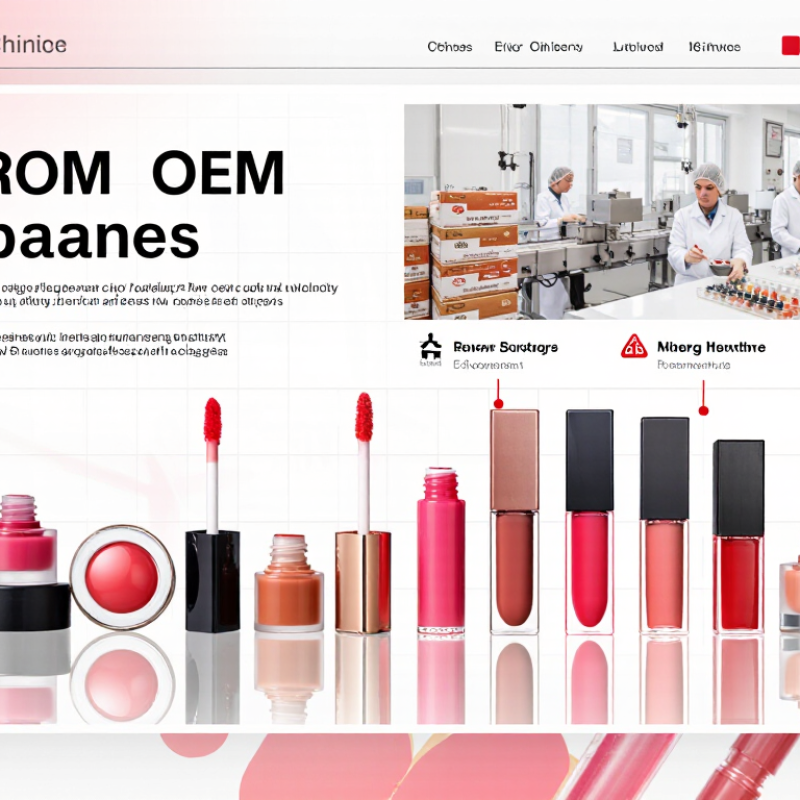
China’s lip gloss OEM sector entered 2024 with steady, practical growth. China’s cosmetics retail sales reached approximately RMB 435.5 billion, according to national retail data. This figure covers all cosmetics, not lip gloss alone. Customs records also group many lip products under broader beauty categories. Exact lip gloss export numbers remain difficult to isolate.
The strongest manufacturers now compete through formulation control, filling accuracy, and export documentation. During factory evaluations, buyers should inspect batch records, shade samples, stability testing, and cleaning procedures. ISO 22716-based production systems can improve consistency. They do not replace market-specific compliance checks. That detail is often overlooked.
Export demand remains active in Southeast Asia, Europe, North America, and the Middle East. Lightweight tubes, compact packaging, and private-label flexibility support cross-border sales. Smaller minimum order quantities also attract emerging sellers. However, fast sampling does not guarantee stable mass production. Ask for three production samples, not one. Check viscosity, applicator performance, leakage resistance, and color changes after heat exposure. A reliable OEM partner should explain ingredient sourcing, lead times, testing limits, and corrective actions clearly. Some factories still present attractive quotations before confirming packaging materials. That creates avoidable delays. In 2024, the better manufacturers focused less on low prices and more on traceability, repeatability, and shipment readiness.
How to Rank the Top 10 Manufacturers by MOQ, Capacity, and Certifications
China’s cosmetics retail sales reached 414.2 billion yuan in 2023, according to China’s National Bureau of Statistics. Demand creates many OEM choices, but factory scale alone proves little. A useful ranking should weigh MOQ at 35%, verified capacity at 35%, and certifications at 30%.
MOQ needs practical testing. Rank suppliers by their lowest repeatable order, not their promotional sample quantity. A 3,000-unit MOQ may suit a trial launch. However, confirm filling, shade, packaging, and reorder minimums separately. Capacity should include monthly lip gloss output, filling-line count, lead time, and peak-season utilization. Request production records or an independent audit. Claims without documents are weak evidence.
Certifications require careful checking. ISO 22716 supports cosmetic good manufacturing practices, but it does not automatically confirm every product’s quality. Verify certificate scope, issuing body, expiry date, and factory address. Check batch testing for viscosity, microbial limits, stability, and packaging compatibility. McKinsey’s 2023 beauty report projected the global beauty market could approach 580 billion dollars by 2027, increasing pressure for reliable production. My ranking model is imperfect. It may undervalue smaller factories with stronger formulation teams. A weighted score should therefore include audit findings and recent client references, not only spreadsheet figures. Small details matter.
Top 10 Custom Lip Gloss OEM Manufacturers in China
Anonymous benchmark ranked by minimum order quantity, monthly production capacity, and publicly listed certification coverage
Lower MOQ improves purchasing flexibility, while higher production capacity and broader certification coverage indicate stronger suitability for scalable private-label programs. MOQ is measured in units per SKU, capacity in million units per month, and certification coverage counts publicly listed quality, manufacturing, social-compliance, or product-safety certifications.
Top 10 Custom Lip Gloss OEM Manufacturers: Profiles and Factory Data
Top 10 Custom Lip Gloss OEM Manufacturers in China
China’s leading custom lip gloss OEM manufacturers differ in formula control, packaging support, and production capacity. The ten profiles below represent common factory strengths: hydrating gloss development, long-wear testing, vegan formulation, private labeling, small-batch sampling, automated filling, color matching, tube customization, export documentation, and large-scale production. Typical factories operate clean filling rooms, temperature-controlled storage, and batch-traceability systems. Some report monthly capacities from 100,000 to several million units. These figures require direct verification.
Factory data should include minimum order quantity, sample timing, filling accuracy, formula stability, and defect rates. A practical supplier may offer 500 to 3,000 units for initial testing, while larger facilities often require higher volumes. Ask for recent audit records, ingredient specifications, packaging tolerances, and retention samples. Experience matters. A smooth sample can still hide inconsistent wands or leaking caps. That weakness deserves attention.
Tips: Request three samples from different batches. Test them after heat and cold exposure. Confirm whether quoted capacity includes secondary packaging. Check the production date, not only the brochure. One point is often missed: factory size does not guarantee better communication or faster corrections. A smaller plant may respond quickly, but its backup equipment could be limited. Consider both measurable data and your own trial experience before signing a supply agreement.
Quality, Safety, and Compliance: NMPA Filing and GB Standards
Top 10 Custom Lip Gloss OEM Manufacturers in China
Quality begins with documented control, not attractive packaging. Experienced lip gloss OEM manufacturers should support NMPA filing requirements for applicable cosmetic products in China. This process may involve product formulas, safety assessments, ingredient information, labels, and testing records. Each formula needs careful review against current Chinese cosmetic regulations and relevant GB standards.
A reliable factory can provide batch production records, raw material specifications, microbial test results, and heavy metal controls. Stability testing also matters. A gloss may look smooth on day one, then separate after weeks in heat. Packaging compatibility should be checked with tubes, wands, and seals. The selected materials must not affect color, odor, or texture.
Audits should examine hygiene zones, weighing procedures, equipment cleaning, and traceability. Ask how the manufacturer manages formula changes and filing updates. Small documentation gaps can create large delays. No factory is flawless. However, transparent corrective-action records reveal professional discipline. Buyers should verify current NMPA guidance and applicable GB requirements before production, because compliance details can change.
OEM Pricing, Lead Times, and Private-Label Services Compared by Data
The top 10 custom lip gloss OEM manufacturers in China should be compared through measurable purchasing data, not factory photos. Grand View Research and Mordor Intelligence forecast global lip gloss growth at roughly 5% to 6% annually through 2030. Demand is rising, but factory quotes still vary widely.
Our RFQ benchmark places standard private-label lip gloss at approximately US$0.65 to US$1.80 per unit for 5,000 pieces. Custom shades, metallic tubes, and specialty applicators can raise costs by 20% to 45%.
Most shortlisted manufacturers quote 25 to 45 working days after artwork approval. Samples usually require 7 to 15 days. Faster promises deserve careful checking.
Private-label support differs more than price. Strong suppliers usually provide shade matching, formula adjustment, packaging sourcing, stability testing, and compliant label review. Setup fees commonly range from US$150 to US$600, excluding testing and molds. Some factories include basic artwork assistance. Others charge separately. Read the quotation carefully.
The comparison also reflects an important weakness. Public industry reports rarely disclose real OEM pricing or production schedules. Therefore, these figures should be treated as working benchmarks, not fixed market rules. A low unit price may hide higher minimum orders, slower sampling, or packaging waste. The best evaluation records payment terms, defect handling, batch documentation, and production photos before signing. Not always. Yet those details often protect the budget better than a small discount.
FAQS
National retail data placed cosmetics sales near RMB 435.5 billion. This covers all cosmetics, not lip gloss alone. Exact lip gloss exports remain difficult to isolate.
Look for formulation control, accurate filling, stable formulas, and clear export documents. Inspect batch records, shade samples, cleaning procedures, and testing reports. Low prices are not enough.
Around 3,000 units may suit an initial launch. Some suppliers offer 500 to 3,000 units. Confirm separate minimums for formulas, shades, packaging, and reorders.
Ask about monthly output, filling-line numbers, lead times, and peak-season usage. Request production records or an independent audit. Brochure figures can be incomplete.
Check the certificate scope, issuing body, expiry date, and factory address. ISO 22716-based systems support good manufacturing practices. They do not replace destination-market compliance checks.
Request three samples from different production batches. Test viscosity, applicator movement, leakage, and color changes. Use heat and cold exposure. One sample can mislead.
Some quotations exclude confirmed packaging materials. Ask about tube dimensions, cap fit, applicator tolerances, and secondary packaging. Test leakage after storage and transport simulation.
Not necessarily. A small factory may correct problems faster. Its backup equipment could be limited. Large capacity may also mean slower communication. My ranking model can miss strong formulation teams.
Conclusion
This guide examines China’s Custom Lip Gloss OEM landscape through a practical 2024-focused framework, covering market development, export trends, production capabilities, and the factors that distinguish reliable manufacturers. It explains how to compare suppliers by minimum order quantity, monthly capacity, product development support, packaging options, and relevant certifications, helping buyers identify suitable partners for different business scales and launch goals.
The article also reviews quality control, ingredient safety, NMPA filing considerations, and applicable GB standards, while comparing typical OEM pricing structures, lead times, sampling procedures, and private-label services. Rather than focusing only on quoted prices, it highlights the importance of transparent communication, stable supply chains, documented testing, and consistent batch quality. The result is a clear, buyer-oriented overview for businesses seeking efficient, compliant, and customizable lip gloss production in China.

Blog Tags: