MPlus Beauty Hub

Cosmetic Insights &
Industry Trends.

Discover expert articles on makeup formulation, OEM innovations, and global beauty events.

Formulation Science

Color Cosmetics
Excellence.

Stay informed with cutting-edge developments from our Milan R&D laboratories.

Manufacturing Expertise

Pioneering
Beauty Solutions.

Exploring next-generation applicators, sustainability, and private label growth strategies.

0%

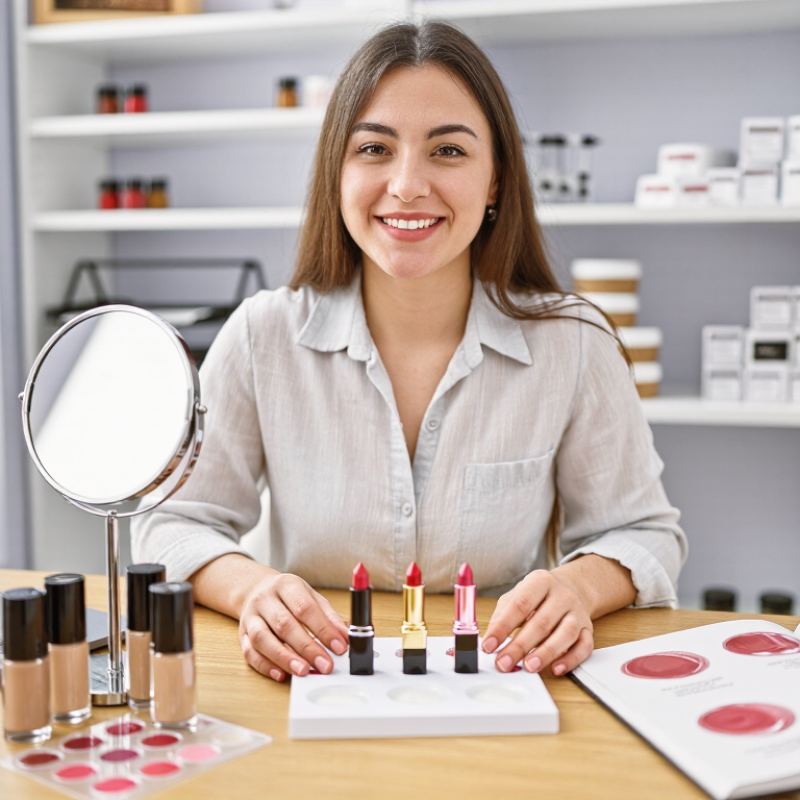
A White Label Makeup Supplier manufactures products that another business can sell under its own brand. The supplier may offer ready-made formulas, packaging options, and production support. The exact service varies. Some suppliers let brands choose colors and finishes; others offer fewer changes and require larger orders. For a founder comparing lipstick samples at a desk, that difference can shape the entire launch.

Beauty entrepreneur Estée Lauder said, “I never dreamed about success. I worked for it.” Her words suit this decision: a supplier relationship needs careful checks, not just an attractive catalog. Ask for sample shades, ingredient information, minimum order quantities, production timelines, and packaging specifications. Check how a formula looks under different lighting, and whether the cap stays secure after repeated use. Small details matter.

A supplier’s polished presentation is not proof of consistent quality. Request clear answers about batch checks, product documentation, and how concerns are handled. Compare samples before committing, and keep written records of agreed specifications. It may feel tedious. It is useful. One point deserves reflection: a ready-made formula can save development time, but it may also make a brand less distinctive. That trade-off is easy to miss when a launch date feels close. This guide explains how White Label Makeup Supplier partnerships work, what questions to ask, and where careful judgment matters most.
What Is a White Label Makeup Supplier?

What a White Label Makeup Supplier Does

What a White Label Makeup Supplier Does

A white label makeup supplier makes cosmetic products that another business can sell under its own name. The supplier may offer ready-made formulas, such as foundation, lip color, or powder, then provide packaging and labeling options. The business chooses products, colors, and container styles that fit its customers. It usually does not develop every formula from scratch.

The supplier’s work can include sourcing ingredients, manufacturing batches, filling containers, and checking product quality. Ask what testing and product documentation are available, and confirm which tasks your business must handle. A sample can reveal practical details a catalog misses: how a cap closes, whether a shade looks different in daylight, or how a cream feels after application. Small differences matter. A supplier’s exact services vary, so confirm production times, minimum quantities, and who reviews label information before ordering. That conversation may feel less exciting than choosing colors, but it can prevent avoidable surprises.

Tips: Request samples from the same production process you plan to order. Check texture, shade, scent, and packaging yourself. Keep written notes on approved samples and specifications. If a detail seems unclear, ask again; assumptions are easy to make, and sometimes suppliers answer only part of the question.

How White Label Makeup Production Works

What Is a White Label Makeup Supplier?
How White Label Makeup Production Works

A white label makeup supplier makes products that another business can sell under its own name. Production often starts with choosing an existing formula, such as a cream blush or pressed powder. The buyer reviews shade options, finish, texture, and packaging, then requests samples. Test color in daylight, wear the product for several hours, and check how it sits in its container. Small details matter.

After approval, the supplier confirms the formula, artwork, packaging, order quantity, and production schedule. The product is made in batches, filled, labeled, and checked against agreed specifications. Ask about checks for appearance, weight, packaging fit, and batch records, as well as how problems are handled. Samples can mislead. A shade may look different in a larger production run, or packaging may feel less sturdy than expected. Clear written specifications and a retained reference sample can help reduce surprises. A capable supplier should explain lead times, minimum order quantities, ingredient documentation, and approval responsibilities without promising results that testing has not confirmed.

What Is a White Label Makeup Supplier? — How Production Works

A white label supplier makes products that another business can sell under its own brand. The timeline below shows illustrative planning ranges for common production stages; actual lead times vary by product, customization, testing, and supplier.

How it works: Choose a product and existing formula, review samples, approve the formula and packaging, then the supplier manufactures and prepares the order for dispatch. A custom formula may require additional development time.

Which Products and Services Suppliers Provide

A white label makeup supplier provides ready-made or adjustable formulas that a retailer can sell under its own name. Its catalog may include foundation, concealer, powder, blush, mascara, eyeliner, lipstick, and gloss. Some suppliers offer shade matching, fragrance-free options, and finishes such as matte or satin. Small details matter.

Services often begin with samples and a product brief. Teams can adjust pigment, texture, coverage, and packaging, then manage filling, labeling, carton sourcing, and batch checks. Some suppliers also provide stability and packaging-compatibility testing, ingredient documentation, and shipping coordination. Ask what each test covers. “Quality checked” is too vague. Minimum order quantities and lead times can affect launch costs more than a glossy sample suggests.

Demand makes these services relevant, but it does not guarantee a product will sell. McKinsey’s 2023 beauty-market report estimated that global beauty could reach $580 billion by 2027, growing about 6% annually. Circana reported that U.S. prestige beauty sales rose 14% to $31.7 billion in 2023, while mass beauty grew 6% to $27.4 billion. Those figures cover broad beauty segments, not an individual supplier’s makeup line. They help explain why suppliers offer both ready-made catalogs and custom development. A shade chart can look complete on paper, yet still miss how tones shift in daylight. That deserves a real wear test.

What Is a White Label Makeup Supplier? — Products and Services Suppliers Provide
Category Typical Products or Services What the Supplier May Provide Key Considerations for Buyers
Complexion makeup Foundation, concealer, primer, setting powder, blush, bronzer, and highlighter Existing formulas, shade options, product filling, and private-label packaging Check shade range, undertones, finish, coverage, wear performance, and sample availability.
Eye makeup Mascara, eyeliner, brow products, eyeshadow, and eye primer Formula and applicator choices, color selection, filling, and packaging options Ask about smudge resistance, application characteristics, ingredient restrictions, and testing documentation.
Lip products Lipstick, lip gloss, lip liner, lip balm, and liquid lip color Available shades and finishes, formula selection, filling, and decorated containers Review color consistency, texture, scent, wear, packaging compatibility, and sample results.
Tools and accessories Makeup brushes, sponges, and selected applicators Product sourcing, assortment selection, custom labeling, and bundled packaging Confirm materials, dimensions, durability, cleaning instructions, and whether items are made or sourced by the supplier.
Formula and customization Stock formulas or, depending on the supplier, modified or custom formulations Formula selection, color matching, sample development, and adjustments to texture or finish Clarify development fees, minimum order quantities, ownership terms, timelines, and whether changes require new testing.
Packaging and labeling Primary containers, cartons, labels, and product decoration Packaging selection, label application, printing coordination, and assembly Check container compatibility, artwork requirements, packaging lead times, and responsibility for final label approval.
Manufacturing and quality Batch production, filling, assembly, and quality-control checks Production planning, batch records, in-process checks, and finished-product inspection Ask about quality procedures, traceability, defect handling, production capacity, and batch-size requirements.
Testing and documentation Product specifications, ingredient information, and available test reports Documentation support and coordination of applicable safety or stability testing Requirements vary by product and sales market. Confirm which tests and records are included and who is responsible for regulatory compliance.
Order and fulfillment support Sampling, production scheduling, carton packing, and sometimes shipping coordination Quotes, minimum order details, estimated lead times, and shipment preparation Confirm payment terms, shipping responsibilities, reorder timelines, and how delays or shortages are handled.
In brief A white label makeup supplier typically manufactures or sources cosmetic products that a buyer can sell under the buyer’s own branding. Product range, customization, documentation, minimum order quantities, and included services vary by supplier and should be verified before ordering.

How White Label Differs from Private Label

What Is a White Label Makeup Supplier?
How White Label Differs from Private Label

A white label makeup supplier typically offers finished products developed for multiple buyers. A business selects an existing formula, such as a matte lipstick or light foundation, then adds its own branding. Choices may include shade range, package color, label layout, and order quantity. The formula itself usually stays largely unchanged. Less development work is needed. That can make launch planning simpler.

Private label usually allows more influence over the product. A buyer may request a different pigment balance, scent, finish, or packaging component. For example, a cream blush might be adjusted to feel less tacky after application. Changes can require sampling, stability checks, added costs, and longer lead times. More control also means more decisions. Not always easier.

The terms are not perfectly consistent across suppliers. One supplier may call a product private label even when only its packaging changes. Ask what can actually be modified, and request the current ingredient list, a sample, minimum order quantity, and production timeline. Compare the sample under real conditions: daylight, warm skin, and several hours of wear. A polished product sheet is useful, but it cannot show how a shade looks on different skin tones. That part takes testing.

How to Evaluate a White Label Makeup Supplier

A white label makeup supplier provides ready-made formulas that can be packaged under your own brand. To evaluate one, ask how products are tested and documented. Request ingredient lists, stability information, and batch records. Check that shade samples match the approved version under daylight and indoor lighting. A smooth texture in one sample is not enough.

Look closely at packaging compatibility. A formula may separate, leak, or change texture after sitting in a tube for several weeks. Ask about minimum order quantities, production timelines, and how the supplier handles defects or formula changes. Get clear written answers. Vague replies are a warning sign. Review samples across more than one batch if possible, and keep notes on scent, coverage, wear, and ease of removal. Also clarify who owns the formula and what happens if an ingredient becomes unavailable. No supplier can promise a flawless launch; even a thorough review can miss something. That is worth admitting. A careful evaluation reduces avoidable surprises, but your own testing remains essential.

FAQS

What does a white label makeup supplier do?

It provides products made for businesses to sell under their own names. Buyers usually select existing formulas and packaging.

Which makeup products may be available?

Catalogs can include foundation, concealer, powder, blush, mascara, eyeliner, lipstick, and gloss. Options vary by supplier.

What should I check when reviewing samples?

Test the shade in daylight and wear it for several hours. Check its texture and how the product fits its container. Samples can mislead.

How does white label differ from private label?

White label usually uses an existing formula with limited changes. Private label may allow adjustments to pigment, texture, finish, or packaging.

What happens after a sample is approved?

The supplier confirms the formula, artwork, packaging, order quantity, and schedule. Products are then made in batches, filled, labeled, and checked.

What quality checks should I ask about?

Ask about appearance, product weight, packaging fit, batch records, and how problems are handled. “Quality checked” is too vague.

Can suppliers change a formula or packaging?

Some can adjust pigment, texture, coverage, or packaging. Changes may require extra sampling, testing, cost, and time. More choices can get complicated.

What details should I confirm before ordering?

Request ingredient documentation, minimum order quantities, lead times, and approval responsibilities. Keep a written specification and reference sample. Still, production may differ slightly.

Conclusion

A White Label Makeup Supplier provides ready-made cosmetic formulas that businesses can sell under their own branding. The process generally involves selecting products from the supplier’s existing range, choosing available packaging and branding options, and coordinating production, quality checks, and delivery. Offerings may include items such as foundation, lipstick, mascara, and skincare-inspired makeup, along with services like packaging support and product customization.

White label usually relies on established formulas and a more streamlined setup, while private label projects may allow greater involvement in developing or modifying products. When evaluating a supplier, consider product range, formulation and packaging options, production capacity, quality-control practices, communication, and minimum order requirements. Clear expectations about timelines, costs, and available customization can help businesses choose a supplier that fits their needs and create a consistent product line.

Olivia

Olivia

Olivia is a professional marketing specialist with a strong understanding of market trends, customer needs, and effective business communication. As a key contributor to the company’s content and marketing team, she regularly updates the corporate website with informative, practical, and......